Moonstone is indeed a mineral – specifically a variety of feldspar with a unique internal shimmer called adularescence. It forms naturally within certain rocks and belongs to the orthoclase mineral family.
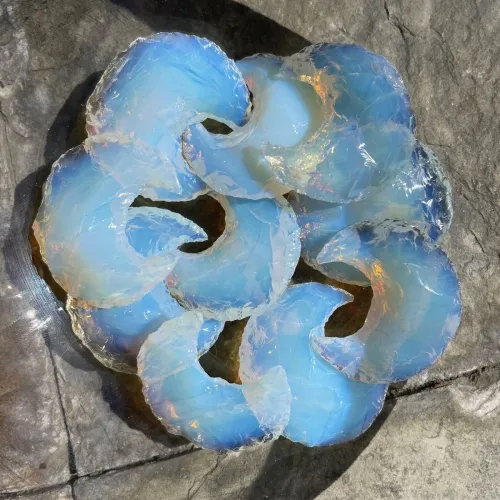
Picture receiving an heirloom moonstone pendant from a grandparent. As you examine its milky surface and shifting blue glow under lamplight, questions bubble up: What exactly is this magical stone? Why do some cloud-like patterns appear inside? And crucially – is it even a real mineral? You're not imagining doubts when moonstones seem to defy ordinary gem properties. That inherited piece might feel weighty with sentiment, yet scientific intrigue anchors it firmly to geological origins we'll unpack. Expect clarity as we trace moonstone encounters – from that gift moment, to gem show discoveries, online jewelry surprises – while answering core questions about composition, identification, and value.
What mineral family does moonstone belong to?
How might my shopping experience reveal moonstone authenticity?
Why does light create that signature glow within the stone?
Where can I typically find natural moonstone in nature?
What practical care preserves a moonstone's delicate beauty?
Moonstone qualifies as a genuine mineral defined by its crystalline structure and chemical formula. Unlike rocks which aggregate multiple minerals, moonstone is primarily orthoclase feldspar formed through natural geological cooling processes.
Picture this: Deep beneath ancient mountain ranges, molten mineral soups slowly cool under pressure. During this solidification, interlayers of orthoclase and albite feldspar alternate microscopically – imagine stacked sheets thinner than tracing paper. These naturally stacked planes scatter incoming light similar to how fog diffuses lamppost beams. Technically termed "adularescence," this phenomenon makes moonstone appear to glow internally. Key details include formation environments like igneous pegmatites, hardness ratings of 6-6.5 on the Mohs scale (suitable for careful jewelry use), and composition variations affecting color from pearly blue to peach hues due to mineral impurities.
Notice how moonstone reveals its mineral nature through observable traits:
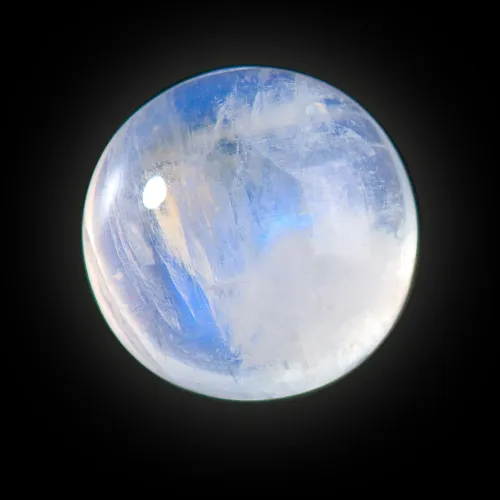
Everyday encounters with moonstones often spark curiosity about their mineral roots. Consider how jewelry choices, gifts, or discoveries invite investigation without textbook labels.
A friend of yours once ordered a moonstone ring online after seeing dazzling product shots. When it arrived lacking depth and shimmer, disappointment mixed with suspicion. That moment highlights key authenticator checks rooted precisely in mineral properties: Online photos can't capture the adularescent glow movement or waxy luster feel of natural crystals. Another common scenario? Inheriting a bracelet with cloudy stones making you wonder whether imperfections mean synthetic material. Actually, those "flaws" often confirm natural formation where trapped air bubbles or other mineral flecks created inclusions - quite different from uniform lab-made perfection. Each experience ties to geological reality. When you notice color shifts under fluorescent versus natural daylight, for instance, you’re witnessing how layered mineral structure interacts dynamically with photons.
Adularescence occurs when light scatters between microscale mineral layers rather than reflecting off a single surface. Think layered feldspar as nature’s precision optics.
Imagine pouring light through a stack of crinkled cellophane sheets – rays refract, bend, and escape unpredictably. Similarly in moonstone, light waves penetrate alternating feldspar compounds at slightly different angles. These orthoclase and albite layers have distinct refractive indices, trapping and tangling photons along their boundaries. The result? Light refracts back toward our eyes as a luminous floaty glow. Noticeable changes occur under varying light intensities: Bright sunlight may wash out subtle glows while bedside lamps heighten the blue moon-like sheen due to concentrated illumination. This ties directly to Mohs hardness measurements too – a mineralogical trait suggesting why delicate polishing preserves this effect since overly aggressive buffing may fracture layered structures.
Distinguishing moonstone from look-alikes combines observation techniques with mineral science. Authentic pieces present patterns and behaviors synthetic versions struggle to replicate.
Recall that gem fair moment when a vendor’s moonstone pendants radiated rainbow flashes. Suspicion creeps: Is this natural? Train your eye like an appraiser starting with surface cues. Slowly shift perspective under consistent lighting: Genuine adularescence flows continuously like cream swirling in coffee whereas imitation glass or resin emits static sparkles. Feel texture differences too. Natural moonstone typically feels cooler initially against skin with waxy smooth polish versus warmer synthetic textures. Check transparency tricks: Lower clarity stones with foggy zones don’t automatically indicate fakes – inconsistent clouding may show natural crystal inclusions. Compare several pieces whenever possible: Earth-mined gems rarely match perfectly in color distribution thanks to geological chaos. That inherited pendant’s unique cloudy patches? More likely genuine than not.
Moonstone valuation balances art with science by weighing factors like adularescent intensity against cutting craftsmanship and durability traits.
Imagine browsing two moonstone rings: One shows watery electric blue mobility while the other appears softly hazy. Why the price gap? Beyond obvious luminosity contrasts, mineralogy answers this. Blue sheens originate from thinner mineral layering diffracting shorter light wavelengths – an optical precision rarer than milky whiteness. Gem cutters then strategize cabochon dome heights to maximize light play without weakening stones along cleavage planes. Settings also matter. Notice that bezel-encased stones protect fragile moonstone edges whereas claw prongs risk chipping during wear. Lastly, geographic origin whispers value stories. Stones from Sri Lanka often display prized 'blue moon' effects whereas Indian mines yield peachy varieties – neither inherently better, just differentiated by collector priorities.
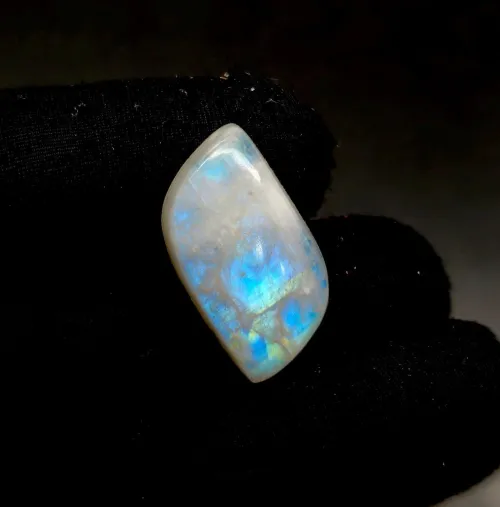
Preserving moonstone's glow combines common-sense handling with its inherent mineral vulnerabilities. Treat its crystalline structure like precious architecture.
You receive a moonstone necklace that feels mysteriously alive under candlelight. Protect that wonder tactically. Start by avoiding ultrasonic cleaners entirely – their vibrational energy can fracture internal layers like mini-earthquakes. Instead, wash occasionally with mild soap rinses using fingertips only. Prevent abrasions by keeping moonstones separate from harder gems like sapphires when storing; fabric pouches make ideal mineral condos. For daily wear, recognize pressure points: Ring settings endure more stress than pendants so opt for protective enclosures. Notice how prolonged sunlight exposure sometimes fades chromatic intensity? Store away from windows when not worn. Simple steps preserve millions of years of geological history on your skin.
Remember how geological patterns and personal discovery intersect next time moonstone appears. Carry three touchstones: Movement validates authenticity, gentle care preserves mystery, and imperfections narrate Earth's story.
If you’re admiring a gift moonstone now, gently tip it toward sunlight. Watch how its internal tides shift – that’s Earth whispering through crystallized time. When evaluating jewelry purchases, move beyond surface dazzle to observe glow transition behaviors and setting durability instead. Your grandfather’s passed-down pin isn’t just cloudy stone; it’s layered mineral artistry carrying celestial stories. Keep your lens attuned to planetary context beyond the gem counter. After all, that glow began its journey through cooling molten rock before humans walked the earth. Let that quiet awe sink in whenever moonlight seems trapped in stone – and remember you’re holding tangible evidence of nature’s patient alchemy.
Q: Where is moonstone commonly found?
A: Major sources include Sri Lanka, Southern India, Brazilian mines, and Australian deposits. Its formation requires specific slow-cooling rock conditions.
Q: Can water damage moonstone jewelry?
A: Brief water exposure generally poses little risk, but avoid soaking or harsh detergents which may penetrate and affect layered mineral stability long-term.
Q: What classification defines moonstone?
A: Mineralogically categorized as a gem variety of feldspar – specifically orthoclase – due to its crystalline structure and chemical composition.
Q: Why does pricing vary between similar-sized moonstones?
A: Value reflects adularescent quality, color intensity, precision of cut, and rarity of geological origin – factors beyond mere dimensions.


$
