Moonstone is a mineral in the feldspar family, known for its unique adularescent sheen that resembles the soft glow of moonlight. Historically and culturally, it has been linked to intuition and emotional balance in various traditions, serving as a symbolic bridge for spiritual connections without claiming empirical evidence. This gem forms through geological processes and comes in colors like white, cream, or blue, with value influenced by factors like sheen intensity and clarity.
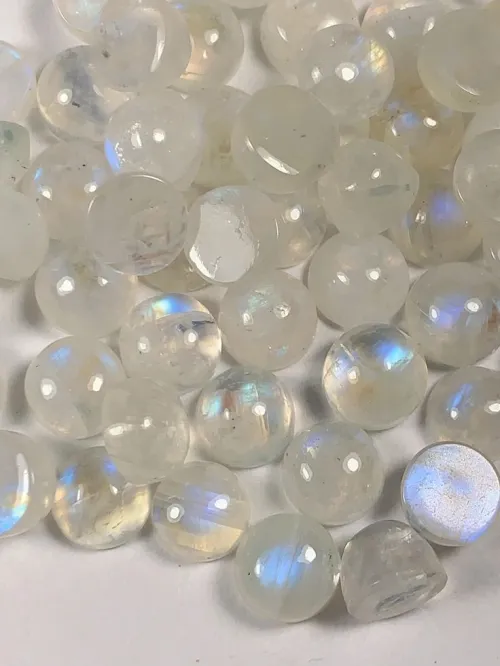
Picture this: You’ve just inherited a moonstone necklace from a relative, and while holding it, you wonder about its deeper meaning beyond that family connection. Or imagine browsing a flea market, drawn to gleaming moonstone jewelry, but hesitating because the prices seem inconsistent and you can’t tell what’s genuine. In moments like these—whether after an online purchase that falls short or when a friend gifts it for stress relief—people often ask not just about the stone’s significance, but a whole web of related questions. Why does it glow? How can you spot the real thing? We’ll explore these here for a clearer understanding, weaving through everyday scenes to uncover what this subtle gem truly represents—all based on verifiable features rather than mystical promises.
1. What's the core meaning of moonstone and why might it appeal to people?
2. How can you relate moonstone to personal moments like shopping or wearing jewelry?
3. Why does moonstone glow under light, and what causes this effect?
4. What signals help identify genuine moonstone versus imitations?
5. How do you pick, use, and maintain moonstone responsibly?
6. What are some common doubts, like its worth or pronunciation?
Moonstone isn’t just a pretty stone; it’s a variety of feldspar mineral with a rich history of symbolic ties to human emotions and intuition across different cultures.
A friend of yours once wore a moonstone ring during a tough week, claiming it helped bring calm—though you stayed skeptical about the how. This scene mirrors many who encounter it, whether in gift shops or online ads. Digging deeper, moonstone forms slowly in igneous rocks, showing colors from white to peach based on mineral mixes, and has been culturally linked to lunar cycles since ancient times. Beyond stories, its appeal often lies in tangible qualities: the adularescent sheen, which creates that signature glow by scattering light within the stone, and its cultural role as a focus for inner balance in some traditions. While some may find it soothing when handling stress, always remember this symbolism varies and isn’t proven; focus on the physical traits like its 6–6.5 Mohs hardness, which makes it prone to scratches but still durable with careful use.
Moonstone seeps into real-world settings through relatable moments—shopping trips, unwrapping packages, or personal rituals—making its meaning feel grounded and accessible.
Imagine opening a delivery box after ordering moonstone online, only to find the piece lacks the vibrant glow shown in photos, leaving you doubting its authenticity . . . then deciding to learn more. This connects directly to key insights: Moonstone’s value factors include sheen prominence and clarity, meaning genuine stones often display that shifting luminosity. In flea markets or stores, noticing variations—like uneven glow intensity—can signal natural origins. Culturally, it’s tied to intuition through practices like mindful wearing. Behind these scenes, scientific reasons stand firm, like the gem’s origin in places like India or Sri Lanka where slow cooling forms its layers, leading to adularescence. Even when inherited or gifted, as many experience, the stone can become a conversation starter tying history to geology without leaning on spiritual certainties.
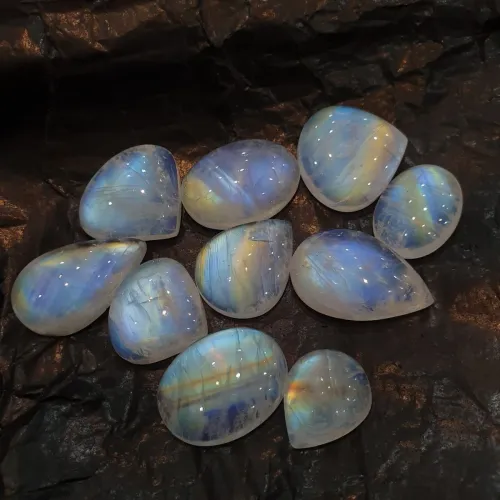
That captivating glow—called adularescence—happens due to light scattering between thin mineral layers inside the stone, creating a play of light that looks like moving moonlight.
A memory comes to mind: Tilted just right under a lamp, an inherited necklace revealed a billowy shimmer, making you pause. This experience highlights the mechanics: Adularescence occurs from stacked feldspar crystals formed during slow cooling in rocks like pegmatites. When light enters, it’s diffused into soft rays instead of sharp reflections, a direct result of internal structures and mineral compressions. Technical features back this up—the sheen shifts blue or gray under bright light due to depth variations, which synthetic stones often miss. Pay attention when shopping; genuine moonstone tends to show uneven intensity across surfaces. Also, its relative softness (hardness 6–6.5) means it chips easily, so handle gently, using what you notice to guide care choices.
To spot authentic moonstone, focus on observable clues like the stone’s temperature, glow consistency, and internal marks instead of trusting just price tags or seller claims.
Picture yourself at a flea market stall, unsure if those rings are genuine—here’s a quick guide based on signals anyone can detect. First, tilt the stone under soft lighting; real moonstone tends to show a billowy sheen that changes with angle, whereas imitations may have static or uniform reflections. For practical steps: Start with basic checks and build confidence through careful examination.
Look for natural inconsistencies that hint at the stone’s origins rather than perfect finishes.
In scenarios like online shopping, these signals—such as color shifts under different bulbs—can prevent disappointments by focusing on verifiable traits like unevenness in sheen.
To pick and care for moonstone wisely, prioritize visible traits during selection, handle it softly to avoid damage, and use simple cleaning methods based on real-world experiences.
A scenario you’ve likely faced: After inheriting moonstone jewelry, you admire it but worry about daily wear. Practical solutions draw from observable facts: Always evaluate potential pieces under natural light to see true sheen before buying. Keep care straightforward—store jewelry separately in padded cases because harder items can cause scratches. Clean gently with mild soap and water to preserve the glow, avoiding harsh chemicals. Also, opt for protective settings like bezels if mounting in rings; this shields against chips due to the stone’s brittleness. When choosing, consult trusted vendors to verify high-value finds, ensuring investment aligns with quality indicators like sheen prominence or size. Stories like these transform care into an intuitive act that respects moonstone’s delicate nature while celebrating its beauty.
Beyond the basics, deeper curiosities arise—like its worth, origin, or symbolism—that fill gaps from everyday chats.
You might recall a moment discussing moonstone with friends, stumbling over how to pronounce it correctly (it’s “moon-stone”). Quick answers: Pronounce it as it’s spelled, and its natural sources include India, Sri Lanka, or Myanmar. Spiritually, across cultures, it has historically represented themes of intuition or emotional harmony—but these stem from traditions, not scientific backing. To spot the real stone, check for that shifting glow and possible flaws rather than chasing perfect looks. As a gemstone cut in cabochons, its value can vary based on qualities like color and sheen clarity. And no, moonstone isn’t a crystal in the strict sense—it’s a mineral with a unique structural composition. Always approach claims skeptically, using evidence like hardness scores to guide judgments.
Remember the visual cues—tilt to see the shifting glow, check for natural inconsistencies, and care gently—to confidently navigate moonstone encounters.
Think back to that online order or flea market scene; if this were your moment now, what would you pay attention to? Notice the sheen intensity firsthand in person, evaluate under real lighting before committing, and treat the stone kindly to avoid wear. With these takeaways, you’re ready for those times—unwrapping a gift, exploring shops, or wearing it—to appreciate the blend of science and symbolism without overpromising. Start small: Next time you’re browsing, observe that internal light play and consider how geology shapes meaning.
Q: What is moonstone meaning in spiritual contexts?
A: In various traditions, moonstone may be connected to enhancing intuition or emotional harmony, drawing on historical associations rather than clinical evidence.
Q: Where is moonstone naturally found?
A: Sources include India, Sri Lanka, and Madagascar, often in regions with pegmatitic rocks where slow cooling forms its iconic sheen.
Q: How to tell if moonstone is real?
A: Look for a changing glow under tilt, natural flaws inside, and cooler temperature to differentiate from synthetics; these observable signals can indicate authenticity.
Q: Why does moonstone glow?
A: The glow stems from adularescence—light scattering between internal layers due to mineral formation—which artificial versions tend to mimic poorly.


$
