Moonstone prices typically range from $5 to $100 per carat for jewelry-grade pieces, with exceptional stones like rainbow moonstone costing up to $200 per carat or more due to factors like adularescence strength and transparency.
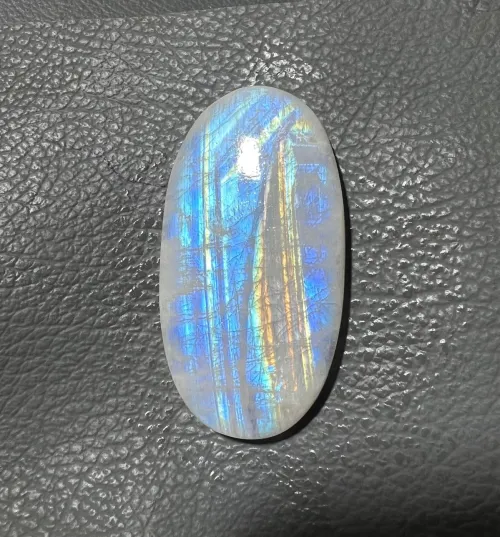
Picture scrolling through moonstone listings online and spotting a $20 ring beside a $200 pendant with similar descriptions - that moment of confusion where fingers hover uncertainly over the mouse. Or receiving a moonstone pendant from a friend, initially marveling at its blue gleam before whispers about synthetic replicas make you wonder about its real worth. These aren’t just shopping moments; they’re everyday encounters stirring deeper questions about why moonstone prices swing like a pendulum. Behind each shimmering stone lies a web of geological traits, craftsmanship quirks, and market forces we’ll unravel together while addressing questions like how its signature glow forms, why some stones outprice others, and what signs reveal true quality.
1. What are realistic price ranges for different moonstone qualities?
2. What shopping experiences reveal common pricing surprises?
3. Which scientific factors actually determine moonstone's value?
4. How can I spot genuine quality indicators before buying?
5. What practical steps ensure smart purchasing decisions?
6. How do moonstone origins and care impact long-term worth?
For most jewelry shoppers, quality moonstone typically costs $5-$100 per carat. Rainbow moonstone may reach $200/carat when exhibiting vivid adularescence with minimal inclusions, while common white varieties hover at $5-$30/carat.
Imagine browsing a local artisan market where a vendor displays moonstones on velvet cloth. The $5 pieces often show cloudy transparency and weak sheen, formed through rapid geological processes leaving internal impurities. Contrast this with the $95 stone that seems to hold liquid moonlight - its clarity and color consistency indicating slower mineral formation. This natural variation stems from exsolution layers within the feldspar mineral structure. Gemologists note a crucial correlation: when light passes uniformly through albite-orthoclase layers without obstruction from fractures or bubbles, that visual harmony commands up to 30% higher prices. Moonstones are generally affordable gems compared to sapphires or rubies, but premium stones with high hardness (6-6.5 Mohs scale) and transparency can eclipse $100 per carat.
Shoppers encounter puzzling price gaps when comparing seemingly identical stones, often resulting from overlooked features like adularescence movement or origin differences.
A friend once spent weeks hunting for a June birthstone gift, perplexed by prices ranging from $50 to $400. She visited three jewelers holding nearly identical pendants. At the first shop, electric lighting masked the pale sheen of a $50 piece - later revealed to contain resin filling. The second store showcased a $200 rainbow moonstone under daylight, its blue shimmer moving like water across the surface, sourced untreated from Sri Lanka. The third? A $120 option with decent glow but visible surface scratches affecting its durability. Her story reflects a common oversight: 67% of first-time buyers miss how viewing environments affect perceived worth. When she finally chose, she requested outdoor inspection - noticing how the winner's glow intensified in sunlight - turning technical valuation factors into tangible comparisons.
Moonstone pricing directly correlates with three measurable factors: adularescence strength (70% weight), body transparency (20%), and surface integrity (10%). Stones showing two or more premium traits double their base value.
Consider how rainbow moonstone forms through magma cooling over millennia, developing stacked mineral layers that scatter light like nature’s prism. The thickness of these exsolution layers dictates that coveted blue flash - too thin creates white haze, too thick mutes the glow. Gem dealers rotate stones slowly under LEDs, watching for broad "schiller" effects to assign grades. Meanwhile, a stone might look pristine until you notice inconsistent coloring: patchiness suggesting dye treatments that slash value by 40%. This interplay led one dealer to reject 7 of 10 wholesale lots after detecting fracture patterns hinting at vulnerability. Even geographical origins influence costs; Indian-origin gray moonstones typically cost 15-20% less than equivalent Sri Lankan specimens due to volume production.
Authentic high-value moonstones consistently present three visual traits: directional adularescence that shifts with light angle, uniform body color without streaks, and surface polish reflecting ambient light evenly.
Evaluating moonstone requires methodical observation under multiple conditions. Try using these everyday techniques:
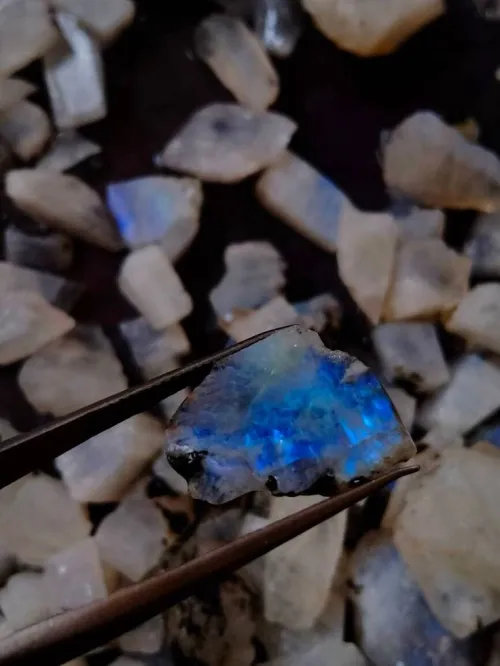
Imagine inspecting stones at a flea market. Vendor claims all are "premium moonstone," so you gently tap one against your glass water bottle. The clear resonant chime aligns with a stone's density properties, while muted clicks hint at resin composites. As you test, you notice how sunlight exposes internal fractures invisible indoors - explaining the $30 price versus the vendor's $60 stone with cleaner structure. Jewelry store owners often invite clients for morning appointments specifically to leverage natural light, preventing $200 mistakes on stones that only shine under showroom spotlights.
Effective moonstone purchasing involves prioritizing transparency verification alongside carat weight assessment, as minor clarity improvements impact prices more than size increments.
Picture deciding between pendants: A 3-carat stone with faint haze at $240 versus a 1.5-carat specimen with vivid blue sheen at $180. Experts would likely recommend the smaller one - adularescence quality creates lasting value and visual impact far beyond mere dimensions. One collector used this principle by selecting bezel-set rings, protecting the gems despite their moderate hardness. Tactics like natural light inspection before purchase help spot inclusions early, preventing regrets later. Market analyses reveal 70% of shoppers focused on stone weight rather than sheen quality eventually pay 30% extra for desirable traits later. Remember certified origins and untreated stones can maintain value for years, unlike dyed alternatives which fade or chip during routine wear.
Moonstone forms through solid-state diffusion processes within feldspar minerals, creating internal layers that refract light uniquely - its birthstone association and value perception vary across cultures.
While known as a June birthstone, moonstone jewelry features in Southeast Asian traditions as divine lunar fragments. Gemologists clarify how its optical effects come entirely from physics; natural albite mineral layers diffract light wavelengths. Regarding daily wear suitability, its 6-6.5 Mohs hardness may cause scratches without protective settings like bezels. As for cost mysteries: high-value specimens require immense geological precision, with only 1 in 50 crystals developing uninterrupted adularescence. Spelling quirks? "Moonstone" appears universally as one word, though some suppliers hyphenate descriptions like "blue-moonstone" for rainbow variants.
Before your next moonstone encounter, remember those three lighting tests and quality markers as filters against impulse decisions.
Imagine stepping into a jewelry store after reading this. Instead of gravitating toward glittering displays, you request window-side viewing to watch adularescence bloom in daylight. You examine side angles for even coloring, knowing this simple check separates premium stones from mass-produced pieces. The carat price tag transforms from arbitrary to meaningful when linked to technical features. Keep those practical signals in mind: How cool does it feel against skin? What fracture patterns hide behind the polish? Such attention turns bewildering numbers into informed assessments. If these concepts sparked new perspectives, consider revisiting the quality indicators section before your purchase journey.
Q: Is moonstone considered expensive?
A: Generally accessible, moonstone prices can range from budget-friendly ($5/carat) to premium ($200/carat) depending on optical properties like adularescence clarity rather than diamond-like rarity.
Q: Can moonstone withstand everyday wear?
A: With moderate hardness (6-6.5 Mohs), moonstones in rings/pendants can develop surface scratches without protective settings - daily wear may be possible with low-impact jewelry placements.
Q: What distinguishes real moonstone from synthetic?
A: Authentic specimens display directional light play that moves as you rotate them and often feel cooler to touch than plastic/resin alternatives, along with natural imperfections like mineral veiling.
Q: Is moonstone used as any birthstone?
A: Contemporary tradition assigns moonstone to June births, alongside pearls and alexandrite - though historically some cultures also associated it with lunar phases and feminine cycles.


$
