While moonstone carries traditional associations with fertility across various cultures, no scientific evidence supports biological effects on fertility. Some individuals find symbolic meaning in it during conception journeys, though its impact remains cultural and personal rather than medically validated. Moonstone is a feldspar mineral exhibiting unique optical properties, requiring careful consideration of authenticity and handling.
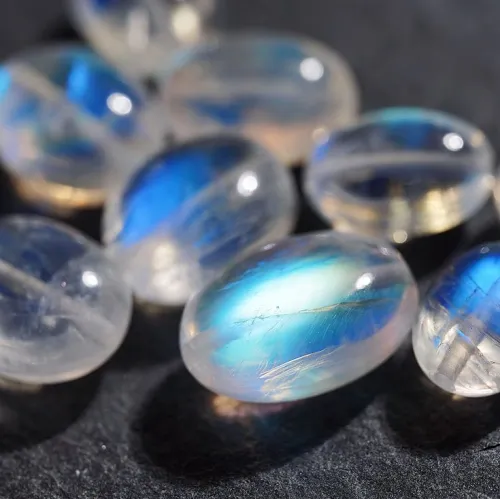
Imagine scrolling through an online boutique late at night, eyes catching a moonstone ring described as a "fertility charm" beside rave reviews. Or picture pausing at a market stall where a glowing pendant sparks hesitant hope after months of negative tests. These moments—like Maya noticing the stone labeled "fertility companion" or Jay's confusion between mystical claims and geological facts—lead many here. Beyond the core fertility question, you likely also wonder how to spot genuine moonstone, why it appears to glow, what historical roots it holds, and whether its fragile beauty withstands everyday wear. We'll address all those quietly spoken questions through everyday scenes and observable science.
1. What does science say about moonstone influencing fertility?
2. What makes people connect emotionally with moonstone during conception journeys?
3. How does moonstone get its signature glow from a geological perspective?
4. How to identify authentic moonstone versus synthetic alternatives?
5. What responsible practices exist for keeping moonstone meaningful yet realistic?
6. How did ancient cultures link moonstone with fertility and the divine feminine?
Moonstone holds no recognized biological effect on human fertility according to reproductive science. While its calcium-rich mineral composition relates to bone health, no mechanism suggests an impact on ovulation, sperm quality, or conception viability.
A friend of yours once read dozens of testimonials promising moonstone aided conception—they were as persuasive as Jay finding claims of boosted pregnancy chances. Yet examining medical journals reveals no hormonal pathways or clinical trials validating these ideas. Under UV light, natural moonstone may show internal fractures indicative of geological formation, but these don't correlate with physiological processes. Instead, researchers attribute perceived benefits to the placebo effect or symbolic resonance—psychological comfort during vulnerable journeys. This aligns with its 6.0-6.5 hardness on Mohs scale; durable enough for jewelry yet clearly distinct from medical interventions.
Individuals exploring holistic conception approaches often view moonstone as tangible hope or mindfulness focus during prolonged cycles. The connection stems from psychological anchoring to ancient symbolism rather than physical effects.
Picture Maya carrying her pendant at appointments—not because she mistook it for medicine, but as a grounding reminder of patience during a multi-year conception journey. People in her position may report feeling centered when holding the stone during meditation routines, much like Elena's ritual comfort. Studies examining meaning-making tools reveal that objects can channel focus during stressful life transitions. Crucially, the stone's moonlight-like glow—caused by layered feldspar minerals scattering light—can become a visual metaphor for cyclic renewal. Practical Tips:
Moonstone's distinctive glow comes from unique geological properties, scientifically termed "adularescence," resulting from its crystalline structure. This phenomenon explains its visual appeal and helps verify authenticity.
When Jay researched why moonstone exhibited an inner glow that photos couldn't capture, he discovered orthoclase and albite feldspars stacked like geological lasagna beneath its surface. As light penetrates these alternating mineral layers, it scatters to produce that ethereal blue-white wave. The effect originates from tiny fissures, inclusions, and varying thicknesses within stones mined primarily in India, Sri Lanka, and Madagascar. Lab-created imitations often lack these natural imperfections; their uniform composition creates less dynamic sheen. This scientific basis transforms how we perceive its physical traits:
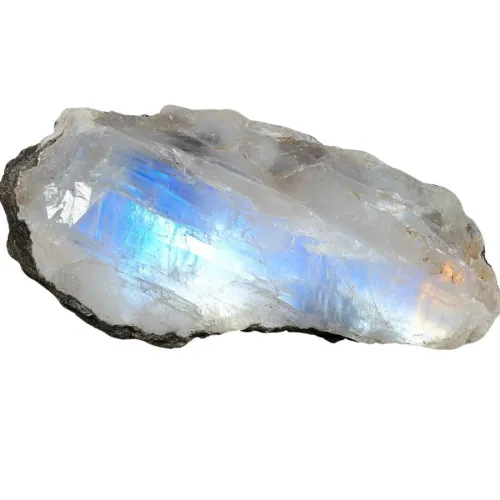
Authentic moonstone typically shows identifiable signs of geological formation distinct from manufactured alternatives. Close observation reveals structural variances reflecting its natural origin.
Remember Elena's unease when her newly acquired meditation stone looked different than advertised? Her instinct was valid. Authentic moonstone exhibits several physical markers you can test personally like:
Using moonstone meaningfully involves acknowledging its limitations while embracing symbolic value through deliberate, non-medical applications. Focus remains on psychological and historical appreciation.
Imagine designing a quiet morning moment—your tea beside a windowsill where sunlight makes your moonstone pendant shimmer blue. You place it there intentionally, knowing it represents not magical intervention but personal endurance. This approach honors traditions traced through Greek lunar goddesses and Roman fertility deities without bypassing medical guidance. Practical Frameworks:
Diverse ancient civilizations linked moonstone with female deities, lunar cycles, and conception—laying groundwork for modern associations. These narratives highlight cultural continuity, not prescientific accuracy.
A friend of yours once pondered whether moonstone's fertility links spanned cultures or were contemporary marketing inventions. Exploring millennia-old relics provides context: Romans dedicated moonstone to Diana (goddess of childbirth) believing moonlight captured within aided conception; in India, it adorned statues of Lakshmi signifying fertile abundance. Cultures dependent on lunar calendars naturally associated moon phases—visible in the stone's pulsing sheen—with biological rhythms. This historical arc from Rome to Mesopotamia explains why today's holistic circles cite "ancient wisdom," though with selective interpretation. Key variations exist—certain African traditions linked its glow with warrior blessings instead. Preserving these stones requires avoiding prolonged UV exposure to prevent fading, just as archaeologists preserve artifacts under controlled light in museums today.
Keep three core perspectives in mind as you encounter claims about moonstone: separate verifiable geological truths from cultural narratives; appreciate its tactile comfort during challenging times; and actively inspect stone properties before building symbolic connections.
The next time you're browsing similar charms—online like Jay or at a store like Maya—pause and rotate the stone under focused light. Notice how the blue sheen moves? Recall what you now know: that's layered feldspar scattering light, a phenomenon science fully explains. If adopting it as a meditation focus, remember Elena's lesson—manage expectations by testing thickness against bright backgrounds. While ancient beliefs offer fascinating context, your empowered awareness hinges on these tangible details observed here and now. Carry that distinction forward intentionally.
Q: Does moonlight affect moonstone properties?
A: Moonlight doesn't measurably alter moonstone's physical properties, though its soft glow in night settings often enhances visual perception of adularescence due to contrast with darkness.
Q: Can moonstone scratch easily during daily wear?
A: With a Mohs hardness of 6.0-6.5, moonstone can develop surface abrasions when contacting harder substances like quartz countertops or zippers. Protective settings and mindful storage tend to preserve its surface integrity.
Q: What maintenance prevents moonstone cloudiness?
A: Gently wipe surface oils and residues using dry microfiber—repeated water exposure may degrade internal fissures affecting light play. Avoid ultrasonic or steam cleaning systems entirely.
Q: Are fertility associations consistent across cultures?
A: Associations vary; while Mediterranean civilizations strongly linked it with childbirth goddesses, certain Eastern traditions emphasized its reflective qualities in divination rather than conception. Its core lunar connection remains the common thread.


$
