To identify raw moonstone, look for its signature adularescence – that floating blue or white sheen when tilted – along with its milky-to-translucent base color and pearly luster. You'll often find characteristic "centipede" cleavage cracks beneath the surface, and the mineral scratches easily with quartz while showing no bubbles under magnification.
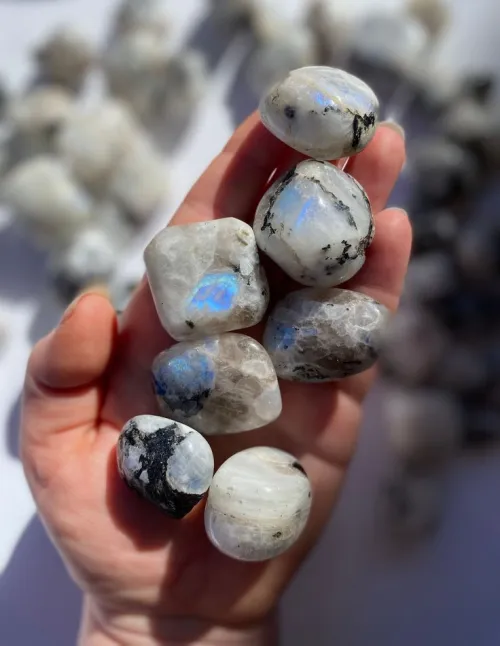
Picture yourself scrolling through gem listings late at night when a photo stops your thumb – a milky stone glowing with unearthly blue light, tagged "untouched moonstone." Could this be real? Or remember inheriting a velvet box filled with rough minerals labeled "Gem Collection," one milky stone marked "Moonstone"? Before gifting or selling, you'd need to verify. These moments spark more than curiosity; they trigger practical questions about authenticity: How can you spot real moonstone without expert tools? What makes its glow different from glass? Why do similar-looking stones vary wildly in price? We'll walk through answers using everyday scenarios gem hunters actually encounter.
1. What are the non-negotiable signs of genuine raw moonstone?
2. How does adularescence actually work when examining stones?
3. Which look-alike stones get confused with moonstone?
4. Can I verify moonstone using simple home tests?
5. What should I know about treatments affecting its value?
6. How should I store raw moonstone long-term?
Genuine moonstone consistently displays four traits: adularescent glow shifting beneath the surface, a milky-white-to-peach base color, pearly luster reminiscent of seashell interiors, and internal fracture lines called cleavage cracks. These traits stem from its feldspar structure, where light dances between mineral layers.
A friend once brought me two stones from a street market – one milky-white, the other pearly-gray. "The seller swore both were moonstones!" she said. Yet when tilted near a window, only one revealed blue light gliding like mist over water. The other's static shimmer proved synthetic. This is adularescence in action. The glow forms when light catches alternating albite and orthoclase layers within feldspar, scattering blue wavelengths. Remember: if the "moonlight" doesn't glide across the surface when you rotate it? It fails the first test.
When examining any potential moonstone specimen, focus on these observable characteristics:
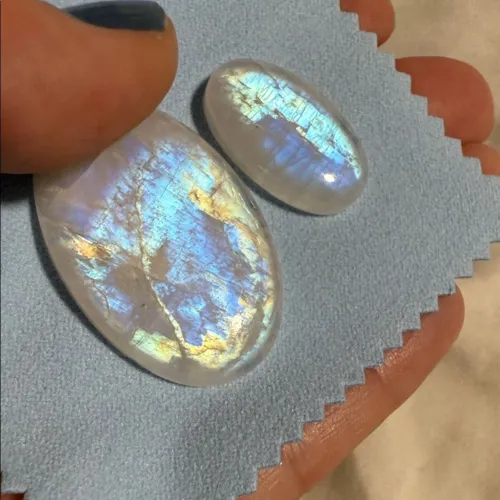
Recognition challenges appear in everyday encounters with stones – online shopping where photos get enhanced, inherited collections needing verification, or jewelry stores comparing similar specimens. Each context reveals key aspects professionals watch for.
At gem shows, vendors sometimes display cloudy stones side by side. One vendor showed me two pale stones - both similar sizes and cloudiness. The vendor labelled one "AAA moonstone" costing 30% more. Turning them beneath my portable LED light showed one exhibited depth in its blue sheen, while the other had flat, bluish-white surface reflection. Depth versus spread matters. Moonstone's schiller effect may vary based on lamellae thickness – premium pieces show concentrated blue adularescence visible even indoors. Lesser-quality stones display weaker, chalkier sheens.
Another common situation: receiving an unexpected heirloom. My colleague Sam once found an unlabeled collection box inherited from his grandmother. One frosty stone captured his curiosity. Holding it against a daylight window revealed milky patches forming moving "islands" without fixed shapes – unlike synthetic stones with uniform haze. He later learned natural moonstones often show uneven color zoning, where untreated pieces form pastel gradients during formation. Stabilized pieces exhibit unnaturally uniform coloring.
Adularescence occurs due to light scattering between microscopic feldspar layers within moonstone. When these lamellae align optimally, they diffract light wavelengths, creating perceived glow that moves across the stone.
Imagine examining two stones outdoors. Rotate rock A slowly: a blue gleam creeps steadily over the surface like low fog, not tied to surface planes. Rock B shows sparkly flashes wherever the light hits edges – that's surface reflection, not adularescence. This physics-based effect distinguishes natural moonstone from look-alikes. How the glow behaves matters: moonstone's sheen glides. Counterfeits made from opalite glass exhibit static sparkles rather than floating light because they lack layered mineral structures.
Common moonstone look-alikes include chalcedony, opalite glass, synthetic spinel, and resin composites. Each shows identifiable traits that differentiate them under scrutiny.
That necklace you bought online? The one that promised "ethereal glow" but arrived with waxy-looking stones? Hold it near daylight. Genuine moonstone reveals depth – like light glowing within milk. Opalite glass equivalents project surface sparkles without depth. Now try scratch testing: steel makes shallow streaks on real moonstone (hardness 6-6.5) but slides off synthetic spinel (hardness 8). Resin-treated stones often resist scratches too. Remember: if bubbles appear under zoom magnification? You're likely holding glass.
Material: Moonstone | Adularescence: Gliding blue/white sheen | Weight: Feels dense | UV Reaction: Generally inert
Material: Opalite | Adularescence: Surface glitter | Weight: Light like glass | UV Reaction: May have greenish fluorescence
Material: Chalcedony | Adularescence: Waxy luster without sheen | Weight: Dense | UV Reaction: Usually dim
Test rough specimens using scratch, light, temperature, and magnification techniques to verify key moonstone characteristics without advanced equipment.
A friend testing his "moonstone" cabochon used three pocket tools: pocket knife, 10x loupe, and small flashlight. Pressing the knife left a scratch, consistent with feldspar's lower hardness. His loupe revealed no gas bubbles (indicating glass) while discovering tiny parallel fractures. Shining light through edges showed gentle internal glow instead of synthetic stone's uniform waxiness. These findings aligned with moonstone signatures. Remember:
Untreated moonstones with strong blue adularescence command premium values, while clarity treatments and fracture fillings affect durability and pricing.
While examining stones from different locations shows patterns: Sri Lankan moonstones may show sharper blues against lighter bodies. Indian material sometimes exhibits creamier bases. Madagascar origins may surprise with faint rainbow flashes called asterism. Treatment types matter hugely too; resin-stabilized fractures feel sticky under hot breath whereas untreated cracks appear cleanly defined under magnification. And should you find raw pieces? Store them wrapped separately in soft fabric away from quartz or sapphire jewelry – their softer structure damages easily.
As you encounter stones online, in shops, or inherited collections, focus on the core visual and tactile checks covered: adularescence mobility, cleavage patterns, multi-light verification, and scratch tests. These practical markers distill our scenarios into reliable action points.
Imagine this becoming your habit: when scrolling listings, you ignore dazzling sales images and instead zoom into surfaces seeking layered glow patterns. At gem shows, you bring a small loupe without apology to inspect fractures. Handling inherited stones, you check for moving clouds inside the body before researching origins. What happens when you apply even one of these steps? You shift from accidental collector to informed participant in mineral stories.
Q: How does raw moonstone differ visually from polished?
Raw specimens typically show frosted surfaces and minimal reflections, with internal structures more visible. Polished pieces emphasize surface brilliance that may obscure internal cracks.
Q: Does moonstone naturally glow under ultraviolet light?
UV fluorescence tends to be weak or absent in untreated moonstone, whereas counterfeits may exhibit unnatural vivid reactions under UV lamps.
Q: Can raw moonstone survive jewelry creation?
Due to cleavage tendencies and softer hardness, it requires protective settings and gentle handling, making cabochons more common than faceted designs.


$
