Moonstone is primarily used in jewelry and decorative items like necklaces or home décor for its unique iridescent glow called adularescence. This mineral from the feldspar family also serves as an emotional-balance talisman in some practices. You'll typically find it set in rings, pendants, or beads where its shifting colors create visual intrigue.
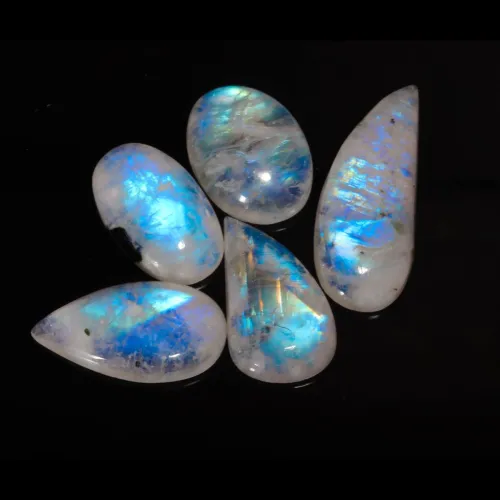
Picture this: You're unpacking a small velvet box containing a moonstone ring ordered online. Like Sarah did last Tuesday, you tilt the stone under your desk lamp and gasp – photos couldn't capture that liquid blue glow rippling across its surface. Or maybe you're Lisa, tracing the curves of an inherited pendant while noticing how afternoon light awakens its hidden shimmer. In those moments where reality outshines expectation, questions arise. Beyond admiring its beauty, you wonder: What creates that glow? How can I spot quality? Can it withstand daily wear? Does its origin matter? We'll walk through those practical curiosities together.
How does moonstone create its signature glow?
What visual clues indicate authentic moonstone vs imitation?
Which settings optimize moonstone's durability for daily wear?
How does origin affect moonstone's appearance and value?
Can moonstone withstand daily use in engagement rings?
What's behind the cultural symbolism of moonstone?
Moonstone often reveals its magic during ordinary moments. That blue haze Maya noticed on her rainy-day commute? It stems from microscopic mineral layers refracting light – an effect that changes with movement and perspective. This isn't mystical energy; it's optical physics observable when you rotate the stone under any lamp. Such moments help demystify while building appreciation for nature's engineering.
The floating light effect comes from layered albite and orthoclase minerals arranged like a geological lasagna. When light penetrates these alternating sheets, it refracts into that signature glow. Quality depends on layer thickness – thinner layers create bluer hues, while thicker ones produce milky whites. These microstructures form over millions of years through igneous rock cooling or metamorphic shifts deep beneath mountains.
Try this at a store or with your piece:
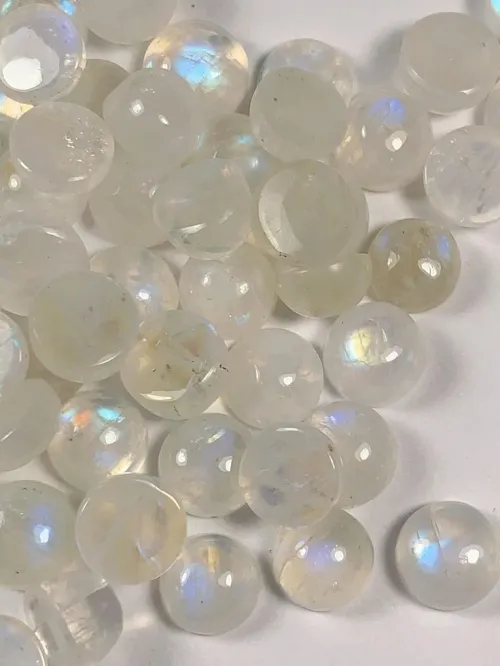
Genuine moonstone displays dynamic color shifts under changing light conditions. Picture Raj at the gem market: He studies two beads, one priced higher than the other. The authentic piece shows cloud-like internal structures under magnification, catching light differently than its flawlessly uniform counterfeit twin. Surface blemishes like tiny fractures can suggest natural origin rather than poor craftsmanship. Always examine under natural daylight – photography often flattens its dimensionality.
When selecting moonstone, prioritize adularescence clarity over perfect transparency. Consider practical protection: Its 6-6.5 Mohs hardness means setting determines longevity. Imagine an engagement ring destined for daily wear – bezel settings shield vulnerable edges better than prongs. For cleaning, a soft toothbrush with mild soap preserves the stone's luster better than ultrasonic cleaners. Store separately in fabric pouches to avoid scratches from harder gems like diamonds.
Origin stories shape perception: Stones from Sri Lanka’s mines often command higher prices for their blue intensity despite similar physical properties to Indian or Myanmar varieties. Spiritually, traditions associate moonstone with inner calm across Hindu, Roman, and Celtic cultures – yet researchers haven't validated these effects. For engagement rings, it works best with lifestyle considerations; its softness requires more mindful wear than sapphire or diamond.
Next time you admire moonstone online or in a shop, remember Lisa turning her heirloom pendant: Notice how light travels across the surface. Try the text-blur test like Maya did with her earrings. Ask about protective settings if considering daily wear. These grounded observations turn passive admiration into informed appreciation – letting you see beyond listings into living beauty.
Q: Why does moonstone glow blue?
A: Light diffraction between microscopic mineral layers creates this billowy sheen, with thinner layers producing bluer tones visible at certain angles.
Q: Can moonstone get scratched easily?
A: Its moderate hardness means household abrasives can create surface marks over time, but proper settings/storage minimizes this risk.
Q: What's the difference between moonstone and labradorite?
A: While both show iridescence, labradorite exhibits sharper color flashes across larger areas, whereas moonstone’s glow appears softer and moves fluidly.
Q: How should moonstone be pronounced?
A: Typically said as "moon-stohn" (/ˈmuːnstoʊn/), emphasizing its lunar connection rather than geological classification.
Q: Does moonstone make good wedding jewelry?
A: Its poetic beauty works for symbolic pieces, though durability considerations may suggest protective settings or occasional-wear designs.


$
