Moonstone forms within igneous rocks like granite pegmatites and metamorphic environments globally, requiring specific mineral combinations of orthoclase and albite feldspar along with exceptionally slow cooling over geological timelines. Primary sources include Sri Lanka, India, Myanmar, Madagascar, and Brazil.
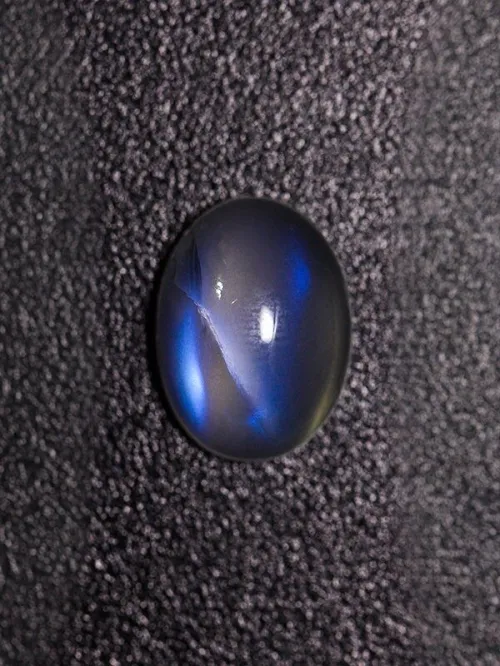
Imagine receiving that moonstone pendant you ordered online. The image showed ethereal blue light dancing across the surface, but now it's just a milky pebble in your palm - no glow, no magic. That frustration connects you to beachcombers eyeing cloudy stones on shorelines, jewelry lovers comparing necklaces with mysterious flash patterns, and travelers in Sri Lankan markets questioning "Ceylon moonstone" authenticity. Beyond the main origin puzzle, we'll unpack how geological forces sculpt its glow, why some stones flash blue while others stay dull, ways to distinguish natural from lab-created pieces, and what sourcing locations reveal about quality. Each scene unlocks concrete technical insights about this moon-kissed stone.
What igneous process creates moonstone's signature glow?
How does origin location affect visual characteristics?
Can anyone distinguish natural vs synthetic moonstone?
What makes Sri Lankan stones unique?
Why do some moonstones lack the blue flash?
Where else beyond Asia is moonstone mined?
How do ethical mining practices impact quality?
Moonstone emerges within granite pegmatites - massive igneous formations where mineral-rich solutions cool at an exceptionally slow pace over millennia. This unhurried process allows orthoclase and albite feldspars to intergrow in stacked layers, creating the signature adularescent glow through light diffraction between mineral sheets.
Picture Earth's crust as an underground bakery. Molten magma oozes through fractures like thick batter, cooling incrementally as pressure drops. A friend once compared it to baking meringue - rush the cooling and it collapses, but slow patience creates perfect structure. That slow crystallization matters because moonstone forms when the minerals orthoclase and albite separate like curd-from-whey-like structures. These alternating mineral sheets become light-diffracting layers, typically measuring 500-6000 nanometers thick. Geological evidence shows pegmatites need undisturbed cooling over 50,000 to 100,000 years to develop viable moonstone. Laboratory analysis confirms this structural perfection determines adularescence quality.
Online moonstone disappointments often stem from retailers misrepresenting origin or treatment status, where Sri Lankan stones command premium pricing but some listings substitute Indian or synthetic alternatives lacking comparable optical properties.
Jasmine saved for months before purchasing a "Ceylon moonstone" ring online. The vibrant product photos showed hypnotic blue waves under the cabochon surface, but the physical piece resembled frosted glass. Her disappointment illustrates how source location matters: Authentic Sri Lankan material tends to show directional blue sheen due to exceptionally regular mineral layers, while Indian stones often exhibit scattered white adularescence. The technical distinction lies in lattice alignment perfection measurable through X-ray diffraction. When Jasmine compared stones with a jeweler's loupe, she noticed her stone lacked distinctive milkiness and showed uniform synthetic bubbles under magnification - clues pointing to man-made origin. Such visual markers form because natural stones contain microscopic mineral inclusions from their formation environment.
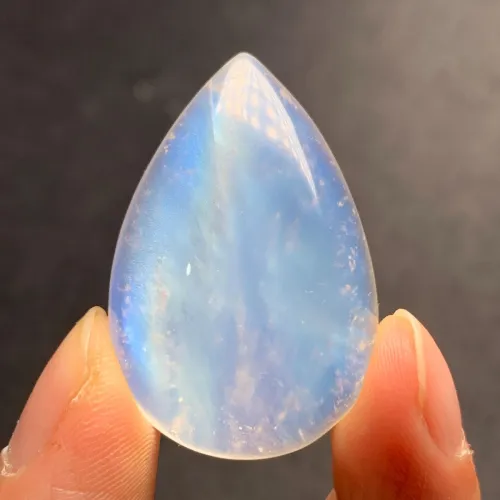
Adularescence requires crysolite intergrowth where orthoclase and albite minerals layer like geological lasagna, with light bending through layers of differing refractive indexes to create the signature glow.
Think of a riverside where cool mountain water meets warm currents. A whirlpool forms at their meeting point, swirling together yet keeping textures distinct. Similarly, moonstone originates where potassium-rich orthoclase magma encounters sodium-enriched solutions. The minerals resist blending but slowly organize into parallel sheets during crystallization - like distinct water volumes swirling into layered bands. This phenomenon requires temperatures around 900°C cooling incrementally by mere degrees per century. Field studies reveal why few locations yield gem-quality material: Only 7% of pegmatite veins develop the precise 500-6000 nanometer layer thickness optimal for adularescence. If layers grow too thick or irregular during cooling, the blue effect may not emerge at all.
Gemologists differentiate moonstone sources through three observable signatures: body transparency quality, adularescence behavior under natural light, and distinct inclusion patterns unique to each geological environment.
First, observe directional blue flash: Rotate the stone outdoors to see if the glow sweeps like headlights across a dark surface. This tends to signal the precise layer alignment found in Sri Lankan pegmatite formations.
Notice body turbidity next: Hold the moonstone against morning light. Southern Indian stones often display milkier hues because microscopic kaolinite inclusions reflect regional formation conditions.
Finally, map sheen uniformity: Examine consistency across the surface. Madagascan stones typically show vibrant but patchy iridescence - geologically indicating disrupted crystallization periods.
These visual cues stem directly from formation environments: Alpine clefts create pressurized uniformity yielding clear bodies and strong sheen (Sri Lankan), while monsoon-exposed Indian pegmatites incorporate more water-based minerals resulting in cloudier appearance. As one miner noted during a field interview, "The stone remembers its birthplace in every layer."
Natural moonstone reveals its origins through cool temperature retention, asymmetric internal textures, and localized adularescence, whereas synthetics often display uniform bubbles, warmer thermal response, and unnaturally even glow patterns.
A collector once showed me two seemingly identical moonstones. "One came from an online auction," she said, "the other from a Sri Lankan pit mine." Together we performed easy field tests: Holding them on our wrists, the natural stone remained constantly cool like wet river pebbles due to its crystalline structure conducting heat away quickly - physical properties difficult to perfectly replicate in labs. Next, we magnified the stones. The synthetic piece revealed tell-tale tiny gas bubbles arranged in patterns, while the natural specimen showed "fingerprint inclusions" - wispy mineral trails recording its geological journey. This visual distinction emerges because artificial stones grow in hours instead of millennia, skipping the irregular pressures that create natural texture diversity. These principles are easily applied during purchases: Rotate pieces slowly under sunshine while inspecting for both milky patches and concentrated blue flashes - uniformity typically signals human intervention.
Commercial moonstone primarily comes from Sri Lanka's Ratnapura district, Southern India's pegmatite belts, Malagasy alluvial deposits, Brazilian volcanic fields, and smaller ethically-operated Myanmar mines.
A traveler exploring Sri Lankan gem markets notices dealers' signs proclaiming "true Ceylon moonstone." Verified material predominantly hails from the Ratnapura district, where centuries-old mining techniques recover stones from clay-rich gravel layers 8-20 feet underground. Workers sift through sediments with woven baskets, seeking stones showing that legendary blue schiller. Meanwhile, Indian mines near Kangayam employ modern hydraulic methods but produce stones with distinctive milky-white glow. Ethical considerations emerge when comparing regions: Small-scale Sri Lankan mines maintain minimal land disruption but yield limited quantities, while larger Indian operations increase supply but raise environmental concerns with pit excavations. Brazilian sources offer promising quality too - particularly gray moonstones from Minas Gerais where miners extract gems near opal deposits. When sourcing moonstone, requesting country-specific certification helps verify geographical origin while encouraging responsible mining practices.
When you next stand before moonstone jewelry or examine stones outdoors, first notice subtle blue movement across surfaces in natural light, then document visible cloud patterns against sunlight - these two simple observations unlock geological narratives. Ask merchants direct sourcing questions about localities and mineral treatments while mentally reviewing cloudiness patterns.
Your next moonstone encounter might happen while scrolling online shops or hiking mountain trails. When it happens, pause and consider: If you spotted a glowing pebble near a stream, what details could reveal its journey? What questions about formation would surface as you turned it toward the light? Each stone carries encrypted memories of ancient magma flows and continental shifts within its layers - scientific stories far more wondrous than mystical explanations.
Where is moonstone found in India?
Southern Tamil Nadu and Kerala regions yield significant material, particularly around Kangayam and Coimbatore districts, characterized by milky-white background with silver flashes.
Moonstone vs opal: key differences?
Moonstone exhibits directional blue flashes while opal shows fiery spectral color plays; structurally, opal contains microscopic silica spheres whereas moonstone features layered feldspar crystalline sheets.
Why some moonstone lacks blue flash?
When mineral layers grow unevenly during crystallization or exceed light-diffracting thickness thresholds, adularescence may not manifest; Indian stones show this trait frequently due to thicker lattice formations.
Where to legally source moonstone in Sri Lanka?
Ratnapura's National Gem & Jewellery Authority certified vendors provide ethical stones traceable to provincial mines with strict environmental oversight.


$
