Moonstone doesn’t function like physical armor or scientifically proven protection. Historically valued in metaphysical traditions, it’s associated with emotional calming and intuition enhancement. Claims about its protective qualities relate to spiritual or emotional well-being rather than empirical evidence, based on its mineral composition and cultural symbolism tied to emotional resonance.
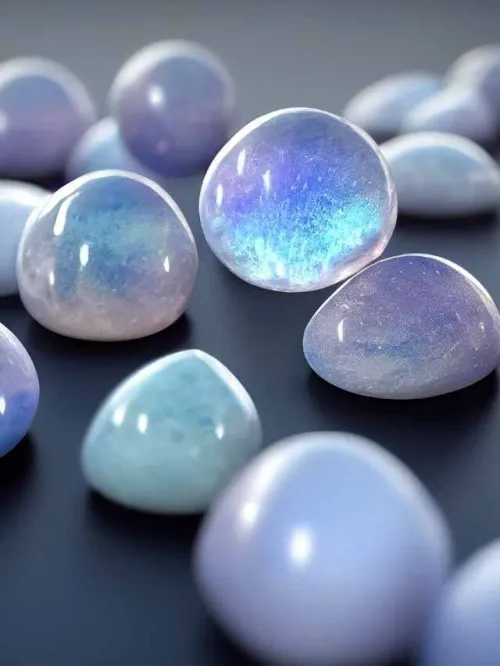
Imagine scrolling online after a draining workday, pausing at a moonstone pendant glowing in product photos – part of you wonders if it’s more than another crystal trend. Or picture opening a gift box from a friend who insists this stone "shields energy," yet it seems unremarkable in daylight. These aren’t niche scenarios. Whether inherited from a grandparent’s heirloom ring or spotted across Instagram feeds promising protection, moonstone surfaces in everyday moments where emotion meets curiosity. When that blue flash catches the eye or post-purchase doubts creep in, key questions emerge: Can its beauty translate to wellness? How can we spot authentic stones? What determines personal value? This article walks through the layers behind those questions.
1. Why moonstone is historically connected to emotional protection
2. The science behind its unique visual signature in jewelry
3. How to visually distinguish real vs. synthetic moonstone
4. Practical care tips preserving appearance and durability
5. Cultural background versus modern interpretations
Moonstone gained significance through human emotion, not lab tests. Its perceived protective role stems from how people traditionally connected the gem’s shifting glow to inner harmony during vulnerability.
Take someone browsing moonstone earrings post-breakup. While research links mindfulness objects to reduced anxiety, the stone’s appeal lies in tangible associations. Ancient Romans saw moonlight reflections as goddess Diana’s presence, interpreting it as divine insight during decisions. These narratives evolved into modern metaphors where moonstone "protects" by serving as tactile anchors during stress. A key distinction matters: No clinical evidence confirms physiological defenses against harm. If wearing it after chaotic days brings calm, that’s psychological association – a placebo-like effect amplified by attention to natural beauty. Like revisiting beloved childhood books, moonstone works through personal resonance rooted in tradition.
That hypnotic blue sheen isn’t mysticism; it's physics interacting with mineral layers within the stone. This technical feature fuels symbolic interpretations.
Picture tilting a cabochon-cut ring under your desk lamp. Notice how the gleam glides like water? This adularescence defines moonstone’s character. It occurs because moonstone forms in stacked micro-layers of feldspar minerals. As light enters, it refracts between these layers, creating blue-white diffusion. Variations in layer thickness affect the intensity – thinner layers often intensify blue hues, while thicker ones show milky translucence. Though geological processes create this effect over millennia, cultural imagination merged the glowing surface with lunar cycles and intuition. This alignment became the cornerstone of its emotional protection narrative. Next time daylight catches that shimmer, recognize adularescence as a measurable trait: a signature of authenticity.
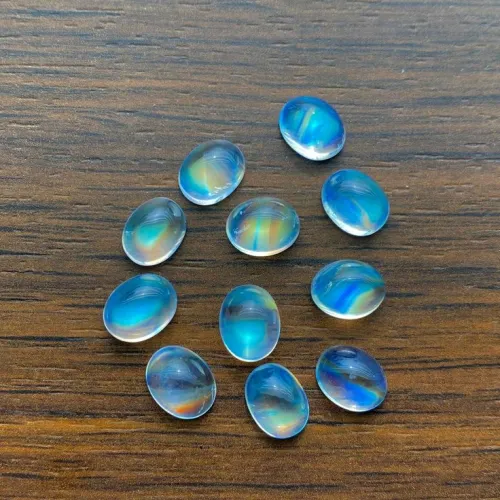
Authentic gem quality requires the natural layered structure causing adularescence; synthetics lack this depth and show distinct visual cues under scrutiny.
You examine a pendant gifted as "healing moonstone" but see rainbow reflections near edges instead of blue glow. Apply quick detective skills rooted in material science:
Begin with visual inspection, then simple physical checks comparing traits against feldspar mineral properties. Focus on interaction with light and surface details.
Select moonstone aligning with emotional goals through observable traits, not marketed promises. Prioritizing visual properties creates meaningful personal connections over mystical beliefs.
A friend hunts for a grounding necklace after losing a job. Instead of seeking "magical shielding," they focus on stones demonstrating >50% blue adularescence – which historically symbolizes calm. Size consideration follows context: Large pendants draw focus downward for contemplation, while stacking rings let subtle flashes appear with hand movements during conversations. Porosity matters too; porous rainbow moonstone requires resin sealer to prevent dullness in humid climates. Such practical choices help convert the gem into wearable intention. Value-wise, vivid floating blues in transparent stones command premium pricing regardless of origin myths. Emotional alignment grows when physical traits resonate with purpose.
Moonstone’s formation, maintenance, and regional symbolism offer practical context for ownership.
Found globally across India, Sri Lanka, and Madagascar, geological origin influences appearance – not spiritual potency. Cleaning requires caution; avoid ultrasonic tools since vibrations shatter layered structures. Use lukewarm water with phosphate-free soap and soft brushes monthly instead. Historically, Victorians combined moonstone with seed pearls for grief jewelry, perceiving duality in its glow: joy and solace intertwined. Modern interpretations evolved beyond ancient Roman lunar tales. Crucially, no evidence confirms moonlight "charging" physical properties. Caring for fractures or resealing porous stones preserves shine, honoring craftsmanship. Comparing it to opal? Unlike opal’s scattered fire, moonstone’s glow moves like a unified wave.
Center judgment around measurable characteristics and intentional use to filter hype. Trust documented history rather than speculative claims.
Before your next jewelry purchase, recall three anchors: First, check for that signature blue glide when tilting the piece – absence indicates imitation. Second, match size to usage context: smaller stones suit daily wear, larger ones embody statement pieces. Third, handle it as feldspar demands: gentle cleaning and isolation from harder gems to prevent scratches. These tangible interactions transform moonstone from abstract promise into functional art. Ask yourself: Does its natural glow spark a personal pause? Do care routines feel sustainable? Such questions help separate cultural appreciation from expectations of miraculous shelter.
Q: Can moonstone help anxiety medically?
A: No clinical evidence supports physiological treatment. Emotional comfort may stem from intentional focus and its soothing aesthetics rather than inherent properties.
Q: Why is blue moonstone pricier than white?
A: Valuation depends on adularescence intensity and clarity. Blue variety demonstrates pronounced floating effects, attracting collectors. Rarity elevates market value over metaphysical associations.
Q: How different is moonstone from opal visually?
A: Opal produces multi-color “fire” with scattered flashes. Moonstone shows wave-like blue or white glow moving coherently across the surface due to its layered structure.


$
