Moonstone is a feldspar mineral famous for its billowy adularescence—a floating moonlike glow created by layered internal structures. Typically found in white, peach, or blue semi-translucent forms, this 6-6.5 Mohs hardness stone suits jewelry but requires mindful handling.
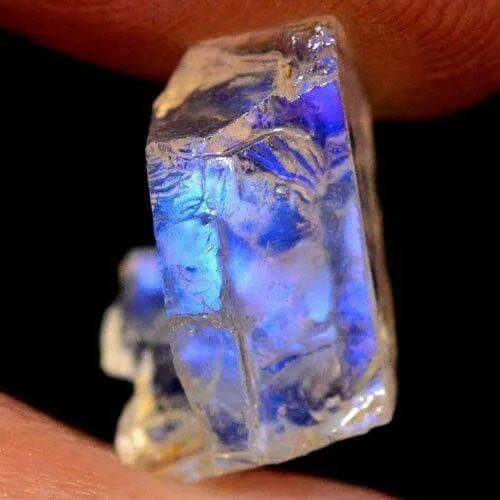
Picture discovering a cloudy gem in Grandma’s velvet-lined box, whispering forgotten journeys across decades—you tilt it, and a wisp of blue drifts like moonlight on water. Later at a shop, three "moonstones" with identical labels vary wildly in price and glow, leaving you staring at sales receipts like hieroglyphs. Sound familiar? Beyond "what is moonstone," we’ll navigate how that liquid sheen works, why jewelers debate rainbow varieties, and whether daily-wear rings risk chipping edges. Whether you inherited earrings or scroll online listings, these answers ground your curiosity.
1. What defines authentic moonstone versus look-alikes?
2. How does adularescence scientifically create that glow?
3. Why do similar stones show huge price gaps?
4. What care prevents cracks in moonstone jewelry?
5. How do origins affect color intensity?
6. Can you swim while wearing moonstone?
At heart, moonstone belongs to the orthoclase feldspar family, forming through mineral cooling into stacked layers that scatter light. Its value depends critically on whether a stone shows genuine adularescence—not mere surface shine.
Imagine comparing two pendants: one pulses with inner radiance like shifting fog, while another mimics cloudiness from exterior polishing. The difference? Microscopic exsolution lamellae within authentic stones refract light directionally. While Sri Lanka yields intense blue varieties, Indian stones often exhibit milky tones. Remember that "rainbow moonstone" is technically labradorite—a distinct species despite market naming conventions.
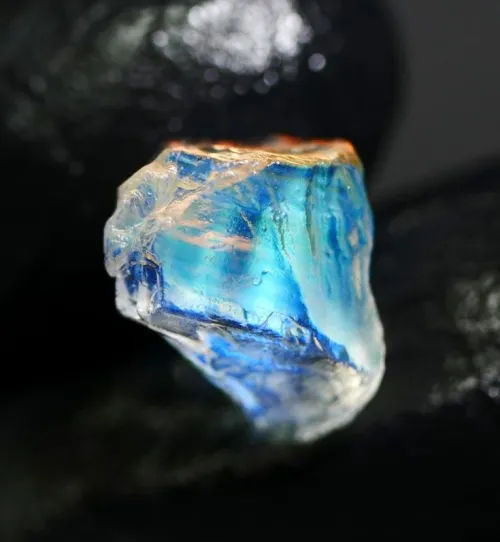
A friend gifts you "intuition-boosting" moonstone drops—but amid compliments, you notice the ghostly shimmer vanishes under fluorescent lights. Why? True adularescence maintains its dance in varied lighting.
These encounters reveal telltale signals. In jewelry stores, directional glide test spotlights fakes: tilt stones vertically—does the sheen sweep like slow clouds or glue itself statically? One shopper recalled three "identical" rings: the first had rigid iridescence; the second lacked subsurface layers visible edge-on; only the third priced highest showed liquid light mobility. These observable differences stem from mineral structures formed over millennia. Blue varieties formed in acidic pebble beds diffuse sodium while cooling into diffraction screens, whereas white stones hardened faster with thicker bands.
Adularescence isn’t magic—it's physics playing with photons across stacked sodium-potassium feldspar shelves.
Picture sunlight hitting frosted glass panels: light bounces irregularly between surfaces, blending into milky softness. Similarly, in fine moonstones, light penetrates minuscule layered gaps called exsolution lamellae (typically 100-1000 nanometers thick). Longer wavelengths (reds, oranges) pass through; blues scatter toward the eye. Lab-created substitutes often mimic this through coatings—but tilt them, and uniform factory precision replaces nature’s spontaneous rhythm. Key signal? Place stones in morning glare: synthetic versions project identical sheen patterns at 45° and 75° angles, while natural rocks shift unpredictably like sun-filtered mist.
Verify authenticity through these experiential checks:
That dazzling online image? It may mask visible cracks weakening the structure, or surface treatments fading through sun exposure.
A first-time buyer learned this hard truth post-sun-holiday—her ring’s pale blue vanished into chalkiness. Why? Some stones contain unstable pigments reacting to UV. Structural integrity also varies. Cleavage planes running straight through crystals imply break risk during resizing or impacts. When comparing stones, prioritize bezel settings for rings to cushion vulnerable angles against daily taps. Pricing anchors to three pillars: adularescence mobility (blue>white), absence of fractures visible under eyeglasses, and translucency uninviting to murky inclusions.
Gem lore speaks of "rainbow moonstone’s spirituality," yet geologically it’s labradorite with albite veins—more optical play than mystical birthright.
Birthmonth confusion runs deeper: moonstone historically shared June honors with pearl until the 1930s redesignations. While New Age claims credit properties from sleep aids to luck charms, mineral traits provide concrete insights. For example, ancient traders preferred moonstones for night journeys since moonlight activated their glow—they understood visibility advantages, not prophecy. Always cross-check mystical labels against Mohs hardness realities: at 6-6.5 rigidity, no gem prevents life’s knocks.
Keep three principles close as you encounter moonstones: seek movable glowing layers in daylight, protect softer stones via bezel settings, and sidestep ultrasonic cleaners.
Recall an heirloom’s quiet magic as you select new pieces—perhaps next time you’ll check the stone under office lights knowing synthetic blues might stay fixed. Or when storing that pendant, you might wrap it solo remembering diamond scratches waiting in crowded boxes. This knowledge equips you for active discernment—not passive purchases. Ask yourself: as the jeweler reaches for the tray, what aspect matters most today? The visible geology beneath the glow? Or the setting guarding fleeting beauty?
Q: How is moonstone different from opal? A: While both show play-of-color, moonstones form via diffraction through mineral layers—not silica hydration spheres.
Q: Can I wear moonstone rings daily? A: Settings matter: bezel mounts shield from knocks, but unprotected bands may chip over time.
Q: Why do some moonstones lack blue sheen? A: Sodium concentration, layer thickness, and formation speed affect hue—Sri Lankan rocks cool slower, preserving blues.


$
