Moonstone forms when molten rock slowly cools deep underground, causing alternating layers of orthoclase and albite minerals to crystallize. The light scattering between these microscopic layers creates its signature glow known as adularescence. This geological process requires specific temperature conditions between 1000-1500°C and unfolds over millions of years in formations called pegmatites.
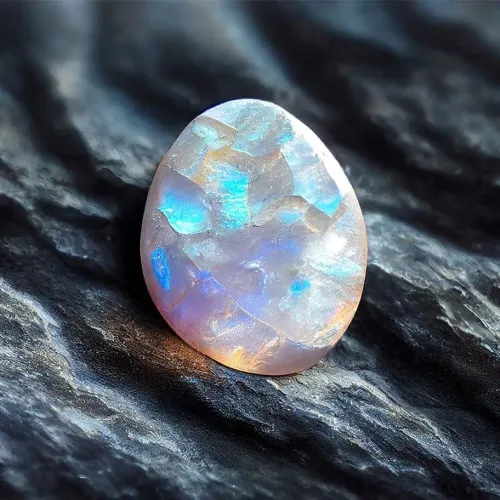
Picture this: you're admiring your moonstone pendant under moonlight and notice its glow differs dramatically from how it looked under the jewelry store's bright lights. Such moments spark that fundamental curiosity - how does nature create this dancing light? Or perhaps while shopping online, you've seen identical-looking moonstone rings priced wildly differently, making you wonder what invisible factors determine value. When questions like these surface, they rarely come alone. You might also wonder why some stones show blue flashes while others glow white, how their birthplace affects appearance, why they require special care, or what separates natural wonders from lab creations. We'll explore all these threads by unpacking moonstone's geological autobiography written in layers of light.
How does Earth's geology manufacture moonstone's signature glow?
What causes the mesmerizing blue sheen in premium moonstones?
Why do moonstones from different regions show distinct characteristics?
How can you spot formation-quality clues when shopping?
What maintenance needs stem from its geological origin?
How do natural and lab-created versions fundamentally differ?
Moonstone begins as fiery magma cooling slowly at precise temperatures. When conditions allow gradual crystallization between 1000-1500°C, alternating ultra-thin sheets of orthoclase and albite feldspars develop in stacked layers like nature's plywood. This slow-cooling phase—lasting millennia—determines the stone's foundational structure.
Imagine watching a volcano's simmering lava lake gradually solidify over centuries. This mirrors how feldspar-rich molten rock (usually in pegmatite formations) transitions from liquid fire to solid crystal. Geological patience rewards us: the longer the cooling period, the more consistently arranged those mineral layers become. Picture this like butter solidifying evenly in a cold kitchen versus forming ice crystals during abrupt freezing. Such precise micro-layering sets the stage for moonstone's magic: when light enters this geological sandwich, it scatters between the differently-textured sheets like sunlight bouncing between clouds.
Adularescence arises from light interference within feldspar layers. As light beams penetrate alternating orthoclase and albite sheets (each with slightly different optical properties), they refract at varying angles rather than passing straight through. This optical disruption concentrates light into visible shimmer bands near the surface.
A friend once described it as watching light play hopscotch across her ring's dome. That glowing effect isn't pigment but physics! The thinner and more uniform the geological layers, the more intense this phenomenon becomes. This explains why prized blue adularescence appears in gems from Sri Lanka: their layers measure mere microns thick thanks to exceptionally gentle cooling histories. Next time you examine moonstone, tilt it around 20 degrees under direct light and observe how the sheen slides across its curves - these responsive light movements reveal layer consistency forged during its creation.
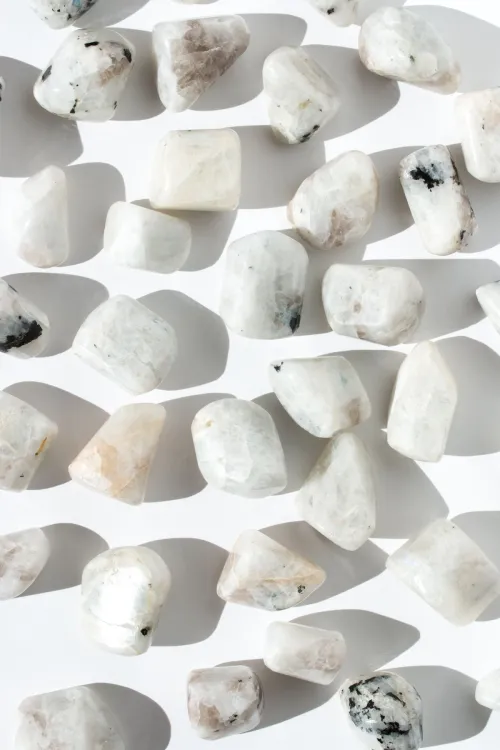
Regional geology imprints distinct personalities through location-specific cooling rates and mineral impurities. Sri Lankan pegmatites yield blue-sheened gems due to uniform slow cooling, while Indian deposits create distinctive greenish bodies with starburst patterns from trace elements.
Picture two moonstones from different continents sitting side by side - one glowing like Arctic ice, the other like forest mist. A jeweler might show you how Madagascar stones often display dramatic rainbow flashes while Australian specimens carry peach tones. These variations become geological postmarks: turbulent volcanic regions introduce impurities creating colorful "body zoning" (visible as irregular patches against light), whereas undisturbed environments develop purer crystals. When examining unlit stones, those irregular coloration patches can reveal whether they formed in geothermally active zones or serene depths. This explains why knowledgeable buyers consider origin as seriously as visible appearance - the location's formation history predetermines optical personality before human hands touch the stone.
Formation quality becomes legible through adularescence behavior under different lights. Before a purchase, examine stones in three settings: intense directional light (like a spotlight), diffused daylight, and dim surroundings to observe how their inner glow adapts - the most balanced performers typically indicate optimal layer development.
Think like that student watching their geology professor rotate a specimen under examination lights. Try varying the angles: well-formed stones maintain sheen visibility between 15-45 degrees. Notice too how the stone handles shadows - rainbow flashes under bright lights might suggest exciting mineral impurities, while milky areas visible in transmitted light could indicate rapid cooling sections. Don't just look straight down; cradle it in your palm and notice whether the glow feels trapped below the surface or dances freely. Pay special attention to these details:
Moonstone's layered genesis creates unique vulnerabilities. Those beautiful cleavages formed along original crystal boundaries mean sharp impacts can cause fractures parallel to the planes where orthoclase and albite meet. Its moderate hardness also makes abrasion resistance lower than popular gemstones.
Remember that centuries-old moonstone brooch passed down in families that lost vibrancy during storage? Such heirlooms teach us practical lessons. Always choose bezel settings rather than prongs - they protect the most vulnerable cleavage planes born during the stone's geological infancy. Avoid ultrasonic cleaners (their shockwaves exploit structural weaknesses) and use only pH-neutral solutions - even gentle soap alkalinity can slowly damage those irreplaceable mineral layers. Notice how professionals rotate displayed specimens? Do the same with stored jewelry to prevent pressure points from stressing specific layers. Simply put, caring for moonstone means honoring its geological history - vulnerabilities that originated in pegmatites require thoughtful accommodation in daily wear.
Laboratory-grown alternatives mimic appearances but lack nature's geological fingerprints. Synthetics typically show unnaturally perfect layer repetition and absence of subtle fluid inclusions caused by ancient hydrothermal environments. Their adularescence often appears flat or "mechanical" under rotating light versus natural stones' organic glow.
While browsing stones online, you'll encounter both versions. Natural gems carry minuscule imperfections earned during formation - perhaps microscopic mineral "confetti" suggesting turbulent crystallization or faint color zoning revealing changing conditions. Lab-grown versions avoid these complexities, often showing artificial perfection that lacks character. Under intense magnification, watch for layer thickness variations - nature creates irregular yet harmonious arrangements versus factory-made uniformity. For investment pieces, always request third-party certification verifying natural origin: their reports document the geological signatures impossible to recreate. These distinctions manifest physically too - rub your fingertip over polished cabochons; authentic moonstone feels distinctively warmer than glass imitations due to mineral composition and microstructure.
Every moonstone invites you to decode its planetary autobiography through three practice shifts: embrace lighting diversity when evaluating, respect geological vulnerability when caring, and honor natural imperfection as origin evidence. Whether you're admiring heirlooms or contemplating purchases, let these insights transform how you see earth's creations.
When you next encounter moonstone jewelry—whether in a velvet-lined case or casual online scrolling—pause before deciding. Rotate that hypothetical ring in imagined daylight. Notice how setting design accommodates natural layers. Consider asking about its geographical origin context like you'd inquire about an old friend's birthplace. This awareness won't dim the magic; instead, it deepens appreciation for the millennia-long dance between minerals and light. How will your understanding shape what you notice tomorrow?
Q: Why does moonstone seem to glow internally?
A: This adularescence effect stems from light interacting between stacked feldspar layers. As light beams refract across alternating orthoclase and albite sheets, they create luminous shimmer visible near the stone's surface.
Q: Why are some moonstones significantly softer than other gems?
A: Moonstone's 6.0-6.5 Mohs hardness relates directly to its feldspar composition and thin layered structure formed during crystallization. This makes it more vulnerable to abrasion than quartz-based gems.
Q: How were the main global deposits formed differently?
A: Formation conditions vary: Sri Lankan pegmatites produced blue-sheen stones through ultra-slow cooling, while Indian formations developed colorful "rainbow" varieties through mineral-rich environments, and Australian deposits created peach-toned gems with distinct light patterns.


$
