Moonstone is associated with emotional balance, intuition, and inner harmony. This feldspar mineral may support emotional transitions and calmness through its unique light-interaction properties, often incorporated as a meditative aid due to its soothing tactile qualities.
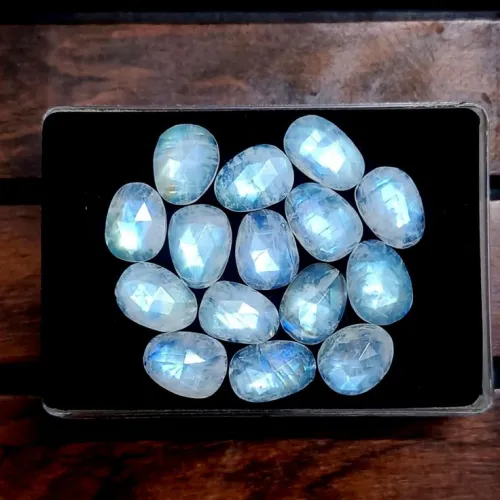
Picture this: You're scrolling through jewelry listings late at night when a moonstone pendant catches your eye – its milky glow promising emotional calm, yet you wonder how a mineral could influence inner peace. Or consider opening a gift box to find your grandmother's moonstone bracelet, worn smooth by decades of life transitions, making you curious about its tangible connection to emotional resilience. When exploring moonstone's spiritual aspects, people typically question its historical roots, physical properties, and realistic benefits versus lofty claims. Whether you're a first-time buyer confused by marketplace inconsistencies or someone noticing subtle focus shifts during meetings while wearing it, we'll address how layered mineral structures scientifically interact with light and perception – and what these observable effects mean for daily use.
What central emotional balance does moonstone offer?
How does its physical glow relate to perceived energetic qualities?
When do people notice tangible connections in everyday situations?
What differences exist between marketing claims and lived experiences?
How can you practically weave moonstone into routines?
Where to ethically source authentic specimens?
Historically recognized across cultures, moonstone offers potential emotional grounding through its connection to natural cycles and tactile properties. The mineral's traditional association with lunar rhythms provides a symbolic anchor during life transitions.
Picture sitting with a therapist discussing anxiety management methods. They slide a palm-sized moonstone across the table, inviting you to notice its cool surface and scattered light patterns. "Notice how holding it changes your breathing rhythm?" they might ask during a grounding exercise. This moment highlights moonstone's historical role in Vedic practices for soothing emotional turbulence. The technical basis? Its layered feldspar structure generates a phenomena called adularescence – light diffusion that can serve as a visual focal point during reflection. While marketing sometimes oversells cosmic properties, tangible qualities like that initial temperature contrast with skin make it a practical tool for present-moment awareness, requiring no mystical explanations.
Individuals often observe subtle effects during transitional moments or daily high-stress situations, typically tied to physical interactions with the stone rather than ethereal experiences.
A friend of yours once described forgetting her moonstone necklace during a crucial presentation – only realizing afterward she'd unconsciously rubbed its smooth surface whenever meeting tension spiked. "That coolness pulled me back to center," she observed. These weight consciousness shifts illustrate how jewelry can become subtle emotional barometers. The scientific underpinning? Moonstone's heat conductivity properties create that distinctive tactile experience. When someone reports prolonged meditation focus, it often coincides with using the stone's temperature shift as a sensory anchor rather than any supernatural force. Such scenarios demonstrate how mineralogical characteristics – its moderate 6-6.5 Mohs hardness making it responsive to body heat – intersect with human perception patterns.
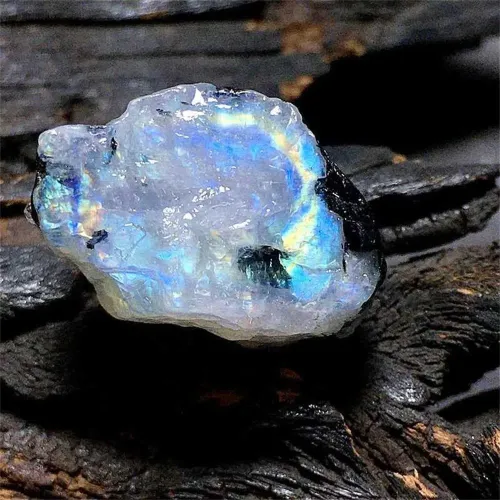
Its signature adularescence stems from measurable geological properties where light scatters through microscopic mineral layers, creating its perceived healing associations.
Imagine inspecting three "moonstones" at a gem show under a dealer's directional lamp. As you rotate them, only one projects that floating blue wave across its surface – others appear flat or glassy. That visible adularescence requires light scattering between tens of thousands of mineral layers, a property specific to feldspar group stones formed over geological timescales. Researchers note that this light phenomenon, observable in premium specimens, can influence emotional states by providing:
The takeaway? What's marketed as "energy" often connects to quantifiable light physics and structural geology.
While marketed as spiritual catalysts, users typically report subtle perceptual shifts rather than dramatic transformations – with experiences varying according to individual contexts.
After purchasing an advertised "intuition-enhancing" moonstone ring, you might initially sense nothing unusual. But weeks later, polishing its surface during a stressful week, you recognize a pattern: meetings where you absent-mindedly rotated the ring correlate to calmer decision-making. Such observed moments illustrate the gap between marketing hyperbole and measurable outcomes. Documented experience signals suggest:
These distinctions help differentiate mineral science from metaphysical claims when evaluating personal results.
Practical usage focuses on leveraging its tactile and visual properties for mindfulness routines during emotionally demanding situations.
A colleague slips her moonstone bracelet beneath her cuff before big client negotiations, treating its smooth surface like worry beads. "It creates a pause before reacting," she explains. These intentional applications align with practical approaches:
Begin with straightforward methods:
For jewelry wearers, consider gentle care: cleaning with mild soapy water prevents oil buildup that could dull its surface glow over time.
Verifying ethically sourced moonstone requires examining geological indicators and responsible mining information rather than spiritual claims.
Picture evaluating potential purchases: You rotate a specimen under a single lamp, checking how its internal glow sweeps across curved fractures rather than radiating uniformly – a natural formation marker. These distinctions help bypass inflated "high vibration" claims by focusing on quantifiable properties: Specimens showing "centipede" inclusions often indicate untreated geology versus imitations with bubble flaws. Sourcing matters too – Sri Lankan moonstones typically display stronger blue waves than synthetic alternatives, whose color uniformity appears unnatural. Prioritize vendors detailing geological origins over mystical certifications, and remember:
Three foundational principles anchor practical moonstone use: prioritize geological verification during acquisition, recognize sensory interactions instead of mystical explanations, and document personal patterns objectively.
When encountering moonstone online or in stores, pause to consider its layered genesis – formed over millennia within Earth's crust rather than cosmic origins. Notice whether that distinctive cooling sensation when first touched resonates with your needs during stressful passages. If integrating it into daily routines, combine with observational practices: journal times when its weight seems forgotten during engrossing tasks, or compare morning reflection quality before versus after handling sessions. These approaches center on tangible mineral qualities – measured light diffraction, heat conductivity rates, and surface changes from natural wear. Before your next jewelry purchase decision, perhaps linger on whether physical properties align with your emotional landscape more than marketed spirituality.
Q: How to pronounce moonstone correctly?
A: Moon-stone, emphasizing both syllables equally - no specialized pronunciation required.
Q: Why is moonstone linked to feminine energy associations?
A: Historical associations from Roman lunar goddesses, though modern usage extends beyond gender frameworks.
Q: Can moonstone withstand daily wear?
A: With moderate 6-6.5 hardness, it may show fine scratches over time; best paired with protective settings.
Q: What creates premium moonstone's blue flash?
A: Precise mineral layer alignment intensifies light scattering – observable under directional lighting.
Q: How does sunlight exposure affect properties?
A: Prolonged direct light may fade peach/blue tones but doesn't alter structural qualities.


$
