Real moonstone typically costs between $5-$50 per carat for commercial quality stones, while exceptionally rare blue specimens with strong adularescence can reach $200-$500 per carat. Final pricing heavily depends on adularescence intensity, body color clarity, and origin—understanding these factors explains why seemingly similar stones carry vastly different price tags.
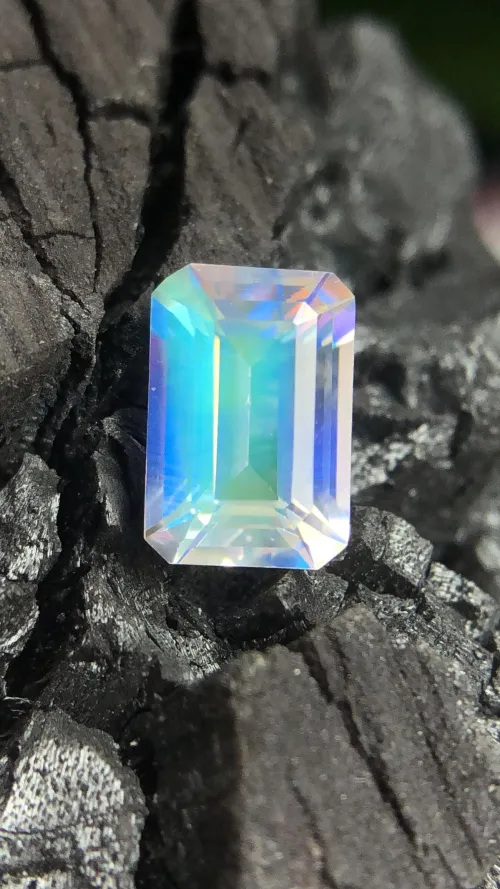
Imagine opening your grandmother's jewelry box and finding a pendant she called "moon magic." You consider selling it but have no idea about its true worth. Or picture scrolling through online listings, stunned by moonstone ring prices ranging from $20 to $2,000. These everyday moments spark questions about value, authenticity, and what distinguishes ordinary stones from treasures. We'll unpack these dilemmas—from deciphering glow intensity to spotting travel-souvenir fakes—while exploring how geology and market realities shape what you'll pay at the jeweler or online marketplace.
1. How moonstone quality tiers translate to specific price ranges
2. Why your location impacts appraisal figures for the same stone
3. Recognizing authentic adularescence versus imitations
4. The science behind moonstone’s signature glow effect
5. Practical checks before purchasing or selling
6. Factors beyond market price affecting your stone’s value
Commercial grade moonstones range between $5-$25/carat, characterized by faint, localized sheen and visible inclusions. Stones showing defined blue adularescence across 60%+ of the surface typically cost $50-$100/carat, while museum-quality specimens over 10 carats with electric-blue movement command $200-$500/carat due to geological rarity—only about 3% of mined material exhibits the ideal thin layer alternation needed for premium glow.
While browsing local jewelers, notice how peach-toned Indian stones might sit beside starkly-priced Sri Lankan blues. Picture a counter displaying three rings: one cloudy white ($40), one translucent gray ($150), and one with liquid-blue waves seeming to float beneath its surface ($850). The dramatic pricing gap stems from adularescence quality—determined by how perfectly alternating feldspar layers diffuse light—and body transparency. Commercial material often appears in silver jewelry under $100, whereas high-end pieces feature bezel-set cabochons minimizing pressure on cleavage-prone edges.
A friend once inherited a pendant and received three appraisal variations: $80 at a mall kiosk (ignoring adularescence), $300 from a specialist (documenting layer structure), and "priceless" from her nostalgic aunt. Such divergences occur because heirloom valuation includes intangible factors while commercial grading focuses on measurable traits like sheen coverage and absence of internal fractures observable under magnification.
Consider a traveler purchasing in Jaipur's markets versus Manhattan's gem districts. At tourist stalls, stones described as "AAA quality" often means abundant material with milky appearance but weak luminosity, while specialized dealers reference validated benchmarks: GIA standards grade sheen intensity as weak (diffuse glow), medium (defined travel), strong (vibrant blue band), or commercial (minor reflection). Emotional premiums may affect sentimental valuations but rarely influence certified appraisals requiring origin documentation.
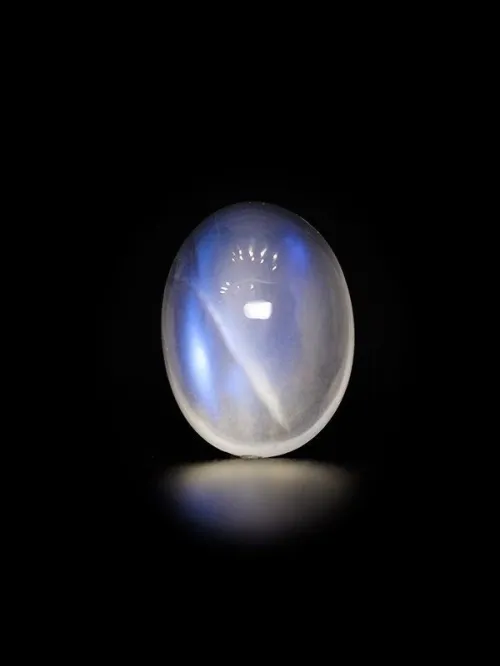
Adularescence—moonstone's signature billowing glow—originates from light scattering between stacked albite/orthoclase layers within feldspar. This unique structure explains premium pricing for stones showing unbroken sheen movement under light, distinct from surface-level sparkle seen in cheaper alternatives. Blue coloration dominates high-value markets because thinner micron-scale layering selectively scatters shorter blue wavelengths—a trait occurring in approximately 7% of gem-grade deposits.
Crystal formations matter greatly. Stones from Sri Lankan pegmatites frequently yield the prized blue sheen due to slower underground cooling permitting ideal layer development, whereas faster-forming Indian material often appears opaque white. Picture holding two rough specimens: one from traditional Ratnapura mines showing internal "depth cues" where light enters crystalline gaps, contrasting with synthetic equivalents displaying uniform bubbles. Natural clarity patterns typically appear angular not curved, affecting professional grading reports.
Authentic pieces show sheen moving beneath the surface when tilted 10-30 degrees under a single light source. Imitation glass or synthetic options instead reflect surface-only flashes. For confident verification, apply these observational techniques during inspections:
A disappointed traveler once showed me a souvenir losing its blue within months—a common outcome of dyed agate replicas lacking moonstone's internal structure. Such pieces exhibit flat sheen without dimensional depth and may reveal dye concentrations around surface scratches.
Before committing to a purchase, initiate a four-step protocol: First, request viewings under directional lighting (simple penlights work) observing how sheen travels. Second, compare multiple specimens side-by-side noting which stones maintain luminosity when tilted away from light. Third, record dealer details about geographic origin—Sri Lankan stones have different crystal habits than Indian or Australian stones. Finally, if valuing inherited pieces, obtain formal documentation listing adularescence grade rather than accepting oral assurances.
Consider protective approaches for daily wear: Stones under 6.5 Mohs hardness benefit from bezel settings preventing edge chipping detectable through gentle fingernail tests. For lasting brilliance, avoid thermal shocks from dishwashing or saunas that may induce microscopic fractures—a key consideration given untreated stones comprise almost 93% of the natural market.
While market price often relates to optical performance, consider historical jewelry featuring prominently veined 1890s moonstones—their imperfect inclusions now attract antique collectors despite lacking bright adularescence. Maintaining such pieces requires specific care: Gentle cleaning with pH-neutral soap prevents clouding versus ultrasonic cleaners that might amplify existing fractures. Similarly, traveler’s stones may hold sentimental worth exceeding replacement cost, though authenticity doubts warrant gemological review.
A colleague inherited a flaked Edwardian-era brooch deemed "commercial grade" yet refused restoration to preserve its patina. Such choices underscore how non-quantifiable worth emerges—not from certification reports but from continuing generational narratives. For heirlooms versus new purchases, consider your personal valuation axis: Investment potential favors gemological documentation while sentimental importance may prioritize conservation regardless of market fluctuations.
Recall that moment examining jewelry under boutique lights—now equipped to notice key differentiators: Prioritize uniform sheen distribution over isolated sparkles; test movement under penlight before purchasing; choose protective settings preserving vulnerable edges. Next time you encounter moonstone—whether at an auction, family event, or store—ask one question: Are quality indicators aligning with the visible light performance? This practical mindset shifts you from passive admirer to informed participant in valuation.
Consider documenting discoveries immediately: Note where glow appears strongest using smartphone photos under consistent light before details fade from memory. For inherited pieces, cross-reference family stories with geological facts—perhaps grandma’s "moon magic" contained unique imperfections now making it irreplaceable despite modest gradings. With observation becoming instinct, you’ll navigate future acquisitions with grounded confidence rather than overwhelmed confusion.
Q: What causes moonstone's blue glow specifically?
A: Thin alternating feldspar layers—typically albite/orthoclase—scatter light with shorter wavelengths (blue spectrum) becoming visible when layers measure just microns thick.
Q: Why might identically-sized stones differ wildly in price?
A: Variations occur primarily in adularescence quality and origin; commercial-grade Indian material appears abundantly while Ceylonese stones with structural perfection command rarity premiums.
Q: Does the setting type affect valuation accuracy?
A: Secure bezel settings can prevent edge damage but may partially obstruct visibility; prong settings facilitate inspections though require careful pressure management during cleaning.
Q: Can moonstone lose its sheen permanently?
A: Natural adularescence persists unless physically damaged; "fading" suggests untreated imitations where coatings diminish through friction. Authentic stones simply require dirt removal to restore luminosity.


$
