Moonstone is relatively abundant compared to rare gemstones like diamonds or emeralds, but high-quality moonstone with strong blue adularescence and clarity is less common and more valuable. Common white moonstone is accessible, while rainbow and blue varieties exhibit higher rarity due to specific geological conditions. Overall, rarity varies significantly based on color intensity, sheen quality, and geographic origin.
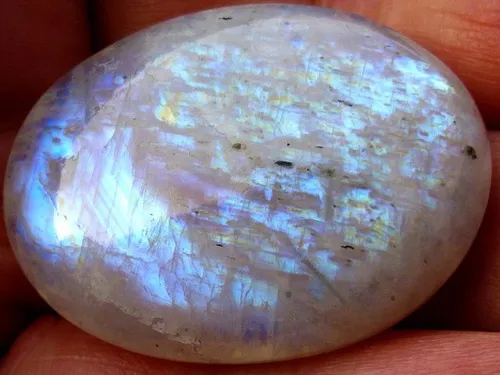
Picture yourself browsing an online jewelry store late at night. One listing labels a milky-white pendant as "rare moonstone," while another describes a glowing blue cabochon with the same term—yet the prices differ wildly. This is when we instinctively wonder: How rare is moonstone actually? Perhaps you've inherited your grandmother's moonstone ring, noticing how its inner light shifts when you move it near the window. Or maybe you're considering a moonstone engagement ring when friends inquire: "But why not something traditional like diamonds?" At that moment, beyond seeking a straightforward rarity scale, questions flood in: What separates common from precious? Can I trust online sellers? How do I spot quality? Why is that glow so mesmerizing? We'll untangle each thread.
1. What key factor determines moonstone rarity?
2. How does moonlight-like adularescence affect scarcity?
3. Why do origin and color dramatically impact value?
4. What market realities influence moonstone pricing?
5. How can I identify authentic versus synthetic stones?
6. What everyday care protects delicate moonstone?
Moonstone proves more accessible than truly scarce gems, yet top-tier specimens approach semi-precious rarity. The most common white varieties appear widely, while rich blue and rainbow specimens account for under 8% of quality finds. Crucially, that signature glow – adularescence – exponentially increases value when vibrant and centered.
A friend recently visited a gem show hunting for "something mystical." She quickly spotted twenty affordable white moonstone pendants but found only two vivid blue pieces after three hours. That ratio echoes geological reality: Moonstone forms within feldspar-rich magma under intense pressure, but precise layer crystallization needed for blue adularescence occurs selectively. While global deposits exist (India produces widespread commercial-grade stones), Myanmar's legendary blue moonstones yield just 1–2 gem-quality pieces per hundred rough samples. This gradient means you might easily find a $30 moonstone ring, while a museum-grade specimen commands thousands – both equally "natural," separated by forces measured in nanometers.
Moonstone's glow stems from its layered structure refracting light – a phenomenon defining both its beauty and scarcity. When properly formed, it creates that signature blue "moonbeam" effect rolling across the surface as you tilt the stone.
Imagine opening a velvet box containing your first moonstone necklace. As sunlight hits it during brunch, milky translucence transforms into electric blue radiance moving like water. This magic moment arises from hundreds of microscopic feldspar layers. Light enters, bounces between these geological "mirrors," and escapes through interference filters as blue wavelengths. But here's why excellence is rare: If layers form unevenly or contain impurities, the glow weakens or appears patchy. Gemologists note the best adularescence requires a crystalline precision occurring only when molten rock cools slower than geological averages—like nature’s lottery favoring certain lava flows. For example, "blue sheen concentration" matters more than size: a coin-sized Sri Lankan stone sold for $250,000 simply because its light dance was centered and flawless.
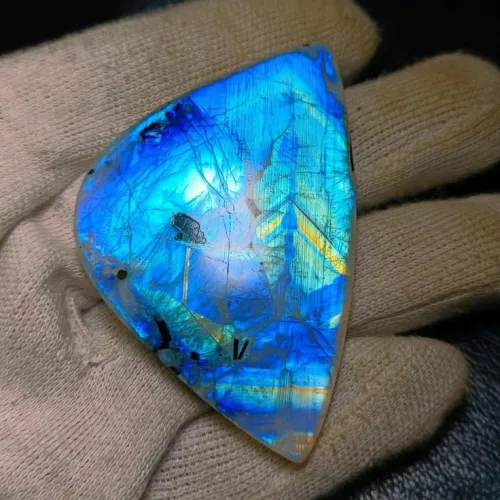
Moonstone's origin and hue fundamentally dictate rarity, with vivid blue and rainbow specimens primarily confined to specific volcanic regions.
Picture browsing gem dealers in Jaipur’s markets. Stalls overflow with affordable milky-white stones labeled "Indian moonstone." Two booths down, one palm-sized blue marvel gleams under a lamp. The vendor explains it's from Myanmar—tripling the price. This scene maps onto mineral reality: India predominates commercial mining with abundant white/peach stones, while blue varieties concentrate near Mogok where mineral-rich magma cooled uniquely. Rainbow moonstone (technically labradorite) hails from Madagascar or Oregon, formed when copper inclusions interact with feldspar. Crucially, the rarest blues combine three traits: transparent body (no cloudiness), cobalt-toned sheen, and over 10mm size—occurring in just 0.5% of Myanmar’s yields. For everyday recognition: if a gem displays intense directional blue that glides under changing angles, chances are it ranks among nature’s premium 5%.
Authentic moonstone frequently appears without significant enhancements, yet marketplace complexity requires informed caution about synthetics and treatments.
The first time Maria ordered "natural moonstone" online, she received suspiciously vibrant glass. Disappointed, she visited a gem lab and learned legitimate stones typically retain slight imperfections—heat treatments or synthetics tend toward suspicious perfection. Most untreated moonstones come with natural signatures: subtle fingerprint-shaped inclusions, muted body tones, and directional rather than sparkly shine. Meanwhile, opalite glass or plastic imitations abound, identifiable through quick warmth tests (real stones absorb body heat rapidly) or examining with a loupe (bubbles suggest glass). For context: mid-range moonstones ($$ range) are generally untreated because enhancements don’t radically improve them. Premium specimens ($$$) may undergo heat clarification to gently clear hazy textures—a process detectable via uniform color banding under magnification. Bottom line: When an online deal seems exceptional, request untreated certification from reputable labs.
Authentic moonstone exhibits specific visual signatures due to its layered crystallization, while counterfeits often miss nuanced cues.
Using a systematic approach helps anyone distinguish genuine stones without labs. Start with these observable features:
One geology enthusiast discovered this while beachcombing Oregon’s coast. Her found rock showed faint bluish shifts but felt warmer than nearby quartz. After testing its layered formation pattern using phone-magnifier apps, she identified it as rainbow moonstone—an encounter demonstrating how observational skills unlock moonstone’s narrative beyond gem certificates.
Modern moonstone appreciation combines informed science with practical care, replacing folklore with durability awareness.
Jen initially avoided wearing her inherited moonstone ring, fearing its alleged "light sensitivity" meant avoiding sunshine. A jeweler later explained: while hardness (6–6.5 on Mohs scale) requires protection from knocks, daylight won’t fade its beauty—modern myths often mislead. Genuine care focuses on physical precautions: bezel settings guarding cleavage planes, gentle soap cleaning (ultrasonic cleaners fracture layers), and separation from diamond/hard-gem scratches in storage chests. Historically, moonstone suffered identity confusion—Roman naturalist Pliny once described it as "solid moonlight," while Victorian collectors misclassified rainbow variants as "opal relatives." Understanding these origins reframes how we interact: your grandmother might’ve considered its glow magical, while you recognize it as ancient crystallography demanding thoughtful handling. So wear it freely—just remove before gardening.
Understanding moonstone’s true value centers on appreciating its subtle light interactions while acknowledging its geological accessibility and delicacy.
Whether you're browsing jewelry boutiques or revisiting personal collections, remember three touchstones from our journey: First, rarity lives in the glow intensity and origin—blue Myanmar stones remain nature’s lottery. Second, let sensory observations guide trust—does its warmth feel real? Does light glide or sparkle? Third, embrace protective handling like bezel settings for daily wear. Next time your gaze lands on that ethereal shimmer at a friend's gathering, you'll see not just beauty but millennia of volcanic alchemy. And when faced with bold online "rare moonstone" claims, your practiced eye can spot the authentic whispers in stone and story.
What color moonstone is the rarest?
Deep blue moonstones from Myanmar are exceptionally rare due to specific geological conditions needed for cobalt adularescence. Peach, white, and gray varieties prove more accessible.
Can moonstone be worn daily in rings?
With protective bezel settings and avoiding physical impacts, moonstone rings may withstand regular use. However, its moderate hardness means scratches or chips can occur during rough activities.
How do I test moonstone authenticity at home?
Conduct quick warmth tests against skin, inspect for rolling light effects when tilting, and check for microscopic parallel layers or minor natural inclusions under magnification.
Is rainbow moonstone truly moonstone?
Rainbow moonstone technically belongs to the labradorite mineral family but shares similar light phenomena. Its classification persists via trade tradition despite differing geological origins.


$
