Moonstone value ranges dramatically based on quality factors. Common smaller stones may cost $10-$30 per carat, while premium blue-sheen specimens can reach $100-$500 per carat. Key valuation factors include the intensity of adularescence (that signature glow), clarity, size, origin, and overall color quality.
Imagine pulling open your grandmother's velvet jewelry box and finding a milky-gray ring. As your thumb brushes its surface, the stone surprises you with a blue-white shimmer that seems to move like moonlight on water. You wonder: is this unique glow actually valuable, or just a sentimental quirk? That inherited curiosity connects us all—whether you're decoding a jewelry certificate that mentions "adularescence" without clarity grades, questioning why similar-looking pendants have 10x price differences online, or staring at a mysteriously cracked cabochon after months of wear. Behind each moment lies practical questions we'll explore: how that glow translates to dollars, why some stones resist daily wear while others fracture unpredictably, and what makes a moonstone transcend its price tag.
What are realistic price ranges based on quality tiers?
How do real-life scenarios trigger valuation questions?
Why does adularescence dramatically impact worth?
What visual clues reveal moonstone flaws or quality?
How can you confidently assess stones without expertise?
What essential care prevents damage and preserves value?
Do symbolic meanings affect perceived worth?
How to handle certificates with missing origin details?
Expect a wide price spectrum: lower grades start around $10/carat rising to $500/carat for exceptional quality. Basic calculations depend on five measurable attributes interacting to elevate or diminish value.
Picture yourself comparing two stones in a jeweler's display case—one priced at $35, another at $240 despite similar size. That difference often boils down to observable technical factors. Quality tiers separate into three brackets: Entry-level stones ($10-$30/carat) typically show faint, localized sheen on translucent-to-opaque bodies, often under 5 carats with visible inclusions or asymmetrical cutting. Mid-range pieces ($50-$120/carat) feature moderate sheen mobility that sweeps across 30-50% of the surface on stones with fewer visible flaws. Premium collectibles ($150-$500/carat) display intense "floating" blue light moving smoothly across >60% of a transparent stone, usually 10+ carats with Ceylon origin documentation. Even within tiers, origin premiums apply—stones from traditional sources like Sri Lanka may cost 15-30% more than identical-quality material from newer regions.
Moonstone valuation spikes during specific life moments—inheriting jewelry, shopping online, assessing damage, or deciphering appraisals. Each scenario reveals different value factors demanding attention.
A friend of yours once clicked "buy" on a "rainbow moonstone" necklace priced at $490—but weeks later spotted nearly identical pieces for $45. What explained this 10x gap? Misleading terminology. Unlike true moonstone displaying blue adularescence, "rainbow moonstone" often describes white labradorite showing multi-color flashes—a distinctly lower-value mineral. This naming confusion creates pricing chaos online where visual similarity tricks untrained eyes. Now move the scene to another moment: receiving jewelry without paperwork. During an inheritance moment, emotional value clouds visual assessment. That milky family ring’s worth hinges on its subtle adularescence strength and inclusion patterns. If the sheen doesn't glide across the dome when rotating it near a lamp, the sentimental value likely outweighs the monetary value. Document gaps become critical when certificates omit origin or treatment disclosures—without proof of Ceylon origin, a dealer’s "premium source" claim remains unverified.
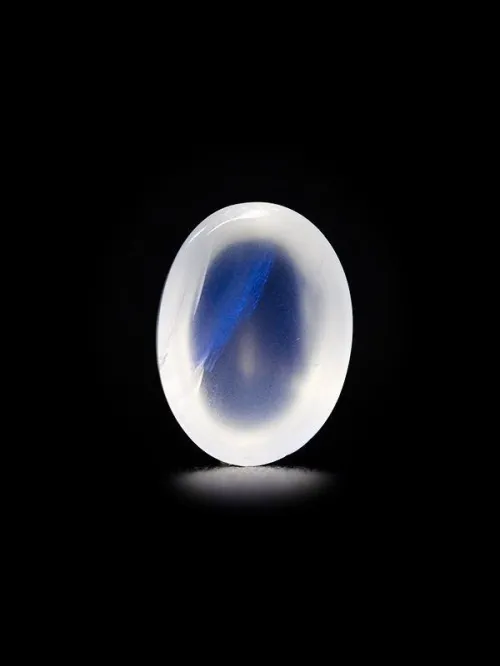
Adularescence controls up to 70% of a moonstone’s value through light diffraction physics. The glow's intensity, mobility, color, and coverage area form a measurable quality matrix that separates bargain stones from treasures.
Picture this: You’re holding moonstone beneath a simple reading lamp instead of a jeweler's spotlight. As you slowly rotate it 15 degrees, watch how the light plays across the surface. Premium adularescence resembles moonlight rippling across calm water—an uninterrupted wave traveling >60% across a transparent background. Lower grades show faint static patches or discontinuous shimmer. The sheen mobility demonstrates optical phenomenon integrity, created when light refracts through microscopic feldspar layers inside the stone. Technical factors like diffused light sources and viewing distance matter: a harsh beam can wash out subtle blue tones while 15-20cm distance reveals smooth motion. This physics-driven spectacle peaks in blue-sheen varieties but note: artificially heated stones may temporarily intensify blue coloration while risking future brittleness—a durability trade-off affecting long-term worth.
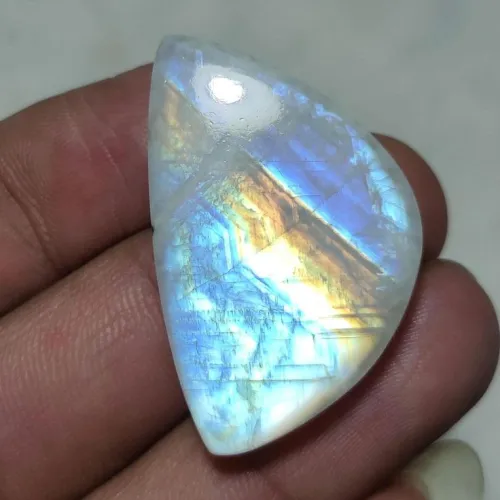
A moonstone’s "body language" involves six observable signals that indicate structural integrity, authenticity, or hidden weaknesses. These cues become your diagnostic toolkit beyond basic beauty.
Imagine carefully inspecting the stone’s surface like a detective:
Use everyday scenarios to spot critical indicators—no lab equipment needed.
Practical self-assessment relies on controllable environmental comparisons and safe physical tests. These low-tech methods provide decision-making clarity before purchases.
A friend once used a clever trick while shopping—she asked the jeweler to place three moonstones on neutral grey paper instead of a black velvet tray. This eliminated deceptive light effects so she could compare true sheen intensity. Try these actionable techniques: In dim lighting, sweep a penlight beam across potential purchases. Natural stones display rolling luminance while artificial versions often sparkle with static glitter. Handling matters too—examine setting styles. A bezel setting protects vulnerable edges better than delicate prongs. For high-value considerations (>$100/carat), request origin documentation and inspect surfaces with a 10x loupe for dye residue in micro-cracks—treatment disclosures affect worth. Remember ultrasonic cleaner warnings: vibration harm doesn’t appear immediately but may cause microfractures to slowly expand during regular use.
True moonstone worth balances purchase price with long-term care needs and personal resonance. Responsible daily handling safeguards your investment while contextual meaning transforms valuation beyond dollars.
Imagine wearing your favorite ring daily only to discover fine scratches appearing after months without major bumps. Unlike quartz’s durable 7-point Mohs hardness, moonstone’s 6-6.5 rating means it scratches relatively easily. This requires practical adjustments: Remove jewelry before mundane activities like gardening or typing on textured laptop surfaces. Instead of ultrasonic tools, use mild soapy water with soft cloth cleaning to prevent fracture enlargements. Beyond physical care, cultural context matters—some value moonstone’s history as a travel talisman or feminine intuition symbol. While these associations don’t directly raise appraisal values, they enhance personal significance and wearing satisfaction. Yet never confuse symbolism with geology: when reselling, dealers focus strictly on the presence of blue adularescence and body transparency rather than metaphysical claims.
Three essentials crystallize moonstone valuation: prioritize mobile blue adularescence, verify treatment disclosures for premium stones, and match jewelry settings to lifestyle safety needs.
If this were your inherited ring or potential purchase, what details would matter next? Slow the moment when light touches the stone. Notice whether its signature blue moves like liquid or appears static and fragmented—that mobility difference can mean $10 versus $400 per carat. When handling certifications, pause on treatment disclosures; a acetone swab may reveal undisclosed dyeing. Finally, honestly assess your daily activities: would prong settings risk catching, potentially chipping? Opting for protective bezels might add $10-$30 to setting costs but prevents $100+ loss from accidental fractures. Keep observing, verifying, and prioritizing durability—these choices build authentic value beyond a price tag.
Which moonstone color has highest resale value?
Transparent stones with mobile blue adularescence maintain strongest secondary market value; milky-white varieties without blue sheen typically have lower resale demand.
How to pronounce adularescence correctly?
It's pronounced [ad-yuh-luh-RES-ens], describing the optical phenomenon unique to high-value moonstone caused by layered internal structures.
Can I shower with moonstone regularly?
Brief warm exposure may not harm untreated stones, but chemical soaps can degrade fractures or dye treatments. Long-term moisture exposure in settings requires high-quality sealant checks.
Why do some moonstones glow under UV light?
Certain trace elements like manganese create luminescence but don't necessarily indicate higher value—adularescence remains the primary valuation driver.
Difference between rainbow moonstone and true moonstone?
True moonstone displays blue adularescence on a transparent body whereas "rainbow moonstone" is technically white labradorite showing multi-colored flashes—a mineral with different composition and typically 30-50% lower value range.


$
