Moonstone is primarily used in jewelry for its unique adularescent glow. It also features in decorative objects and spiritual practices focused on emotional balance and intuition, while industrial applications remain rare due to its moderate durability. This feldspar mineral is valued for its dreamy light play and cultural symbolism rather than functional hardness.
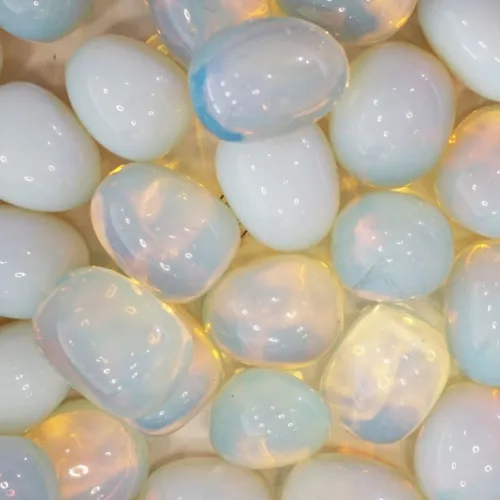
Imagine opening a package expecting a jewel with floating moonlight, only to find a milky stone under kitchen bulbs. This daily disconnect sparks questions like "What's actually inside this stone?" or "Why does my grandma's pendant glow differently in moonlight?" We've compiled answers around your curiosities—from dissecting the glow science to revealing why some spiritual claims link to tangible traits. Along the way, we'll demystify dealer debates like "rainbow moonstone vs. white labradorite" and explore how ancient Roman armor used these stones. Let's navigate your top moonstone puzzles:
1. How is moonstone actually used in daily life?
2. What creates its signature glow scientifically?
3. How can you identify high-quality moonstone?
4. What practical factors matter when choosing moonstone?
5. How do maintenance and cultural roles affect usage?
6. Why are industrial applications uncommon?
Moonstone mainly functions as a jewel for aesthetic or emotional wear—think rings catching light during coffee runs or pendants changing glow from office LEDs to evening candles. Beyond adornment, some use polished pieces as meditation touchstones, while craftsmen carve bookends or small sculptures to showcase its ethereal veils.
Picture this: You're evaluating a "dream-enhancing" moonstone bracelet gift. While the sleep claims lack scientific validation, the stone's cool touch and soothing light streaks may support relaxation rituals. These tangible characteristics align with its historical role in Indian harmony traditions. Crucially, its 6-6.5 Mohs hardness explains why decorative objects feature it more than industrial tools—accidental knocks could fracture its delicate layers. Notice how museum Art Nouveau pieces display moonstone in protected brooch settings rather than high-impact applications, preserving its fragile beauty.
The mesmerizing adularescence—moonstone's signature trait—stems from layered feldspar crystals scattering light like mist over water. When light penetrates alternating sodium and potassium mineral sheets, it refracts into that moon-like sheen dancing beneath the surface.
A friend once compared her heirloom pendant under moonlight versus fluorescent store lighting. In soft outdoor rays, the blue glow flowed like liquid while indoor bulbs revealed milky undertones. This variance showcases how adularescence depends on light angle and source. Scientifically, thicker mineral layers scatter broader wavelengths, yielding rare blue hues rather than common white sheens. These optical properties explain why Sri Lankan stones with ideal crystallisation fetch premium prices yet remain vulnerable to scratches from harder materials. Remember, synthetic alternatives often lack these natural gradients, appearing uniformly artificial.
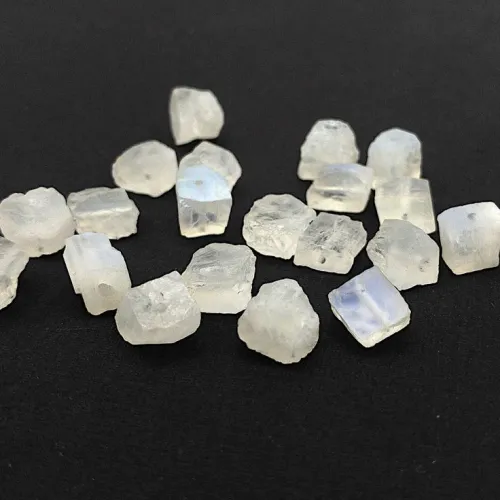
Genuine moonstone reveals identity clues through specific signals when examined with basic tools. Start with these observational methods:
Select moonstone pieces based on lifestyle and setting resilience. For daily-wear rings, prioritize bezel settings shielding the delicate girdle, while pendants suit softer peach or gray varieties demanding less impact resistance.
Recall entering a gem show where dealers debated "rainbow moonstone" authenticity. Beyond arguments, the practical takeaway: Choose oval cuts to highlight asymmetrical glows or round cabochons for balanced displays. Expect natural color variations between stones—consistent blue adularescence increases value but demands protective settings. For frequent wearers, inspecting cabochons yearly prevents minor fractures from deepening. Crucially, avoid ultrasonic cleaners; lukewarm water with mild soap preserves mineral integrity better.
Moonstone's roles extend beyond jewelry into cultural symbolism like Roman breastplates or Hindu lunar celebrations. While modern spiritual markets suggest dream enhancement or intuition boosts, these claims link to poetic traditions more than measurable effects.
After inheriting your grandma's pendant, you noticed how its glow transforms across settings—not mystical energy. Similarly, market claims about "energy amplification" might align with observable traits: Many feel the stone’s cooling sensation may create calming associations. But remember, its sodium-potassium composition requires practical care: Wipe cosmetic traces immediately with microfiber cloths, and store separately from diamonds or sapphires to prevent surface abrasions. Though Indian folklore connects moonstone with inner harmony, treat it as symbolic artistry grounded in Earth's pegmatite-forming forces.
Industrial applications remain limited because moonstone's moderate durability can't withstand mechanical stress or chemical exposure like quartz or corundum. Its layered structure risks delamination under pressure.
Consider moonstone’s (Na,K)AlSi₃O₈ chemical formula making it sensitive even to household acids or sudden temperature shifts. Compare its 6-6.5 Mohs rating to quartz (7) or topaz (8), and the mechanical disadvantage is clear. While rare chatoyant specimens might serve optical niches, most industrial roles prioritize abundant minerals lacking these vulnerabilities. This explains why your moonstone jewelry packaging emphasizes gentle handling rather than functional endurance.
Now as you browse jewelry cases or unpack deliveries, pause on three tangible cues: Try rotating stones to catch moving light sheens before buying; choose bezel settings like invisible shields for rings; and sidestep ultrasonic cleaners by remembering its delicate crystalline layers. Ask: "What angles make this glow dance best?" rather than focusing on unverifiable claims. Every observable detail traces back to the science beneath that milky surface—where ancient geology meets modern fascination.
How to pronounce moonstone correctly?
Say "moon-stohn" stressing the first syllable like Earth's moon.
Moonstone vs rainbow moonstone: what's the difference?
"Rainbow moonstone" typically refers to labradorite with colorful flashes, while true moonstone shows softer blue-white adularescence without vivid spectral hues.
Can moonstone handle daily ring wear?
Its 6-6.5 Mohs hardness makes it vulnerable. Use protective settings like bezels for frequent wear and expect surface scratches over time.
Why avoid ultrasonic cleaning?
Sound vibrations may fracture delicate internal layers or existing stress cracks in moonstone's structure.
Where do moonstones form geologically?
They crystallize in pegmatite veins through sodium/potassium feldspar interactions, notably in Sri Lanka, India, and Madagascar.


$
