Moonstone is not a rock, but a variety of the mineral feldspar. It's classified as a gemstone due to its unique optical properties and crystalline structure formed through geological processes. While it originates within igneous or metamorphic rocks, moonstone exists as a distinct mineral species with identifiable characteristics.
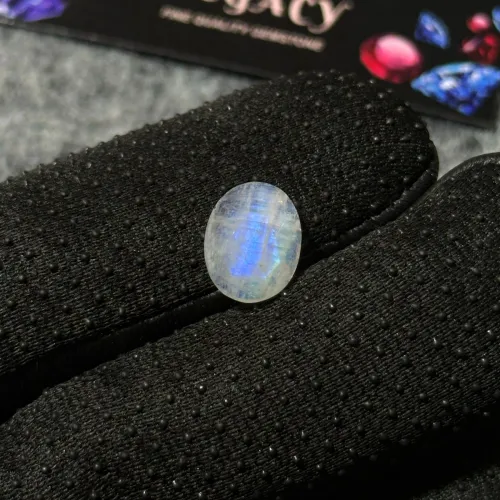
Picture this: You're unwrapping a birthday gift and discover a pendant with a milky-white gem that dances with blue light when tilted. The tag reads "natural moonstone," but your friend calls it a crystal. Later, a geology website refers to it as feldspar. Suddenly, you realize you're holding three different labels for one object—and none clarify if it's actually a rock. This experience mirrors countless jewelry store visits, gemology class debates, and online shopping scrolls where moonstone's identity seems fluid. Whether you're comparing mineral specimens, questioning marketplace terminology, or examining vacation finds, confusion often stems from these overlapping classifications. In the next sections, we'll unpack what creates this ambiguity and explore how geology resolves it through observable properties.
What fundamentally distinguishes minerals from rocks in geological terms?
Where does moonstone physically form within the earth?
How can everyday observations reveal moonstone's mineral structure?
What practical tests differentiate moonstone from common rocks?
Why do conflicting names like rainbow moonstone cause confusion?
How does moonstone's durability compare to other natural materials?
Moonstone qualifies as a mineral due to its specific chemical composition and crystalline structure, whereas rocks are aggregates of multiple minerals. This distinction explains why geology textbooks consistently classify it under feldspar minerals rather than rock categories.
Imagine browsing a mineral exhibit: Granite displays speckled patterns because it combines quartz, feldspar, and mica—multiple minerals forming one rock. Contrast this with moonstone's uniform internal architecture. Its identity hinges on precise atomic arrangements observable through cleavage planes. When a lapidarist splits moonstone, it fractures along smooth, reflective surfaces revealing its monoclinic crystal system. These flat breaks demonstrate how its aluminum-silicate components bond in predictable geometric layers—core markers of mineral classification unseen in amorphous rocks like limestone. For verification, museum curators might show how sedimentary rocks crumble under pressure while moonstone maintains structural integrity, indicating crystalline cohesion.
Terminology clashes occur when academic, commercial, and cultural labels collide, particularly regarding origin claims and optical effects. Moonstone's metamorphic formation within host rocks contributes to persistent rock misnomers.
A friend of yours once described finding "moon rocks" during a Sri Lankan vacation, mistaking the locals' poetic description for geological fact. Picture crystal shops advertising "moonrock specimens"—technically inaccurate since moonstone emerges within pegmatite veins, not as standalone bedrock. This misunderstanding stems from how miners extract it: Chiseling through granite-like matrices to reveal pockets where mineral solutions crystallized over millennia. These formation scenarios explain marketplace confusion. Online vendors especially amplify this by labeling labradorite as "rainbow moonstone," obscuring distinct mineral lineages. Geological surveys clarify that while both share feldspar ancestry, traditional moonstone is orthoclase feldspar with signature adularescence, not layered labradorite. Spotting internal "centipede" inclusions can help distinguish authentic specimens.
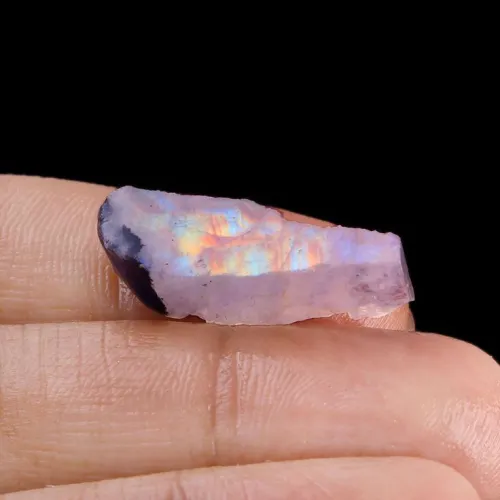
Moonstone displays unique visual and tactile signatures like adularescence and cleavage planes that immediately distinguish it from common rocks through hands-on examination.
Imagine testing a suspect specimen at a gem market: First, rotate it under sunlight. Authentic moonstone exhibits that signature blue sheen gliding across the surface like moonlight on water—an effect called adularescence caused by light diffraction between microscopic feldspar layers. Now try this with quartz or marble; they sparkle but lack that directional glow. Next, press a warm fingertip against it. You'll notice it remains cooler than surrounding stones due to density differences from its interlocked crystals—sedimentary rocks warm faster. Finally, attempt to scratch it with a copper coin; moonstone's 6-6.5 Mohs hardness resists marks that would dent softer calcite-based materials. These sensory checks reveal why jewelers historically favored it for cabochons, prioritizing surfaces that maximize its ethereal glow.
Systematically verify moonstone's identity through physical properties tests and sourcing context rather than relying on ambiguous labels or surface appearances alone.
Picture preparing for a gem show with these decision filters: Start by holding potential specimens against bright light. True orthoclase moonstone shows depth translucency rather than superficial shine. Notice rainbow flashes? That suggests labradorite variation instead—a key differentiation. Next, examine geography; Myanmar and Sri Lankan origins often indicate superior blue adularescence distinct from common fakes. If handling unset pieces, do a streak test carefully: Drag it across unglazed porcelain. Moonstone leaves faint white marks matching feldspar hardness while quartz streaks show differently. Finally, prioritize sellers labeling "feldspar mineral" over mystical "lunar rock" claims. These observable indicators form reliable verification loops that replace guesswork.
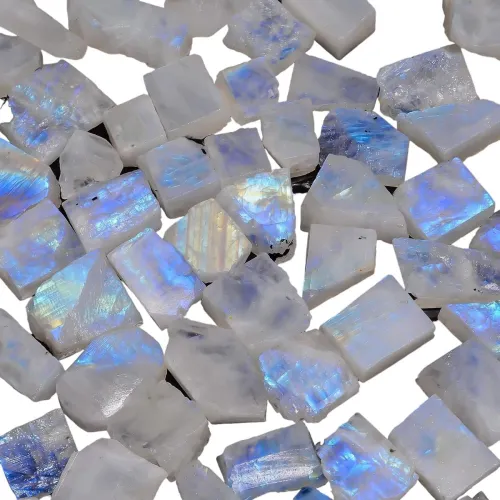
"Rainbow moonstone" describes a variety of labradorite feldspar, not orthoclase moonstone, highlighting how commercial terminology can obscure mineral lineages despite similar visual effects.
A friend of yours recently struggled when online listings alternated "moonstone" and "labradorite" tags for identical gems. Imagine encountering a so-called "moonrock" specimen with iridescent flashes. Rotate it slowly under pinpoint light: Diffuse blue sheens suggest orthoclase moonstone while sharp spectral flashes betray labradorite—different minerals sharing feldspar foundations but distinct crystalline rhythms. Historical naming further muddles this; Victorian jewelers called both "moonstone" for any shimmering white gem. Modern gemological institutes now classify traditional moonstone specifically as orthoclase. When appraisers note Sri Lankan origins and absence of dark backgrounds, they validate authentic pieces. This clarification helps collectors bypass marketing poetry for mineralogical substance.
Keep three core principles handy for real-world encounters: Verify light behavior, examine structural details, and scrutinize geological context to navigate classification ambiguity.
When you next encounter a glowing "mystery stone" in markets or nature, recall the antique dealer testing translucency against sunlight. Notice how they rotate for spectral dances only crystalline minerals provide. Consider the lapidarist weighing Sri Lankan origins for that prized blue sheen. These experiences distill into actionable checks: Tilt before buying, listen for technical terms like "feldspar," and trace origins. Unlike abstract theories, these tangible interactions reveal moonstone's mineral signature through its cool touch, layered glow, and light play. Carry this framework when evaluating treasures—it converts fleeting curiosity into grounded knowledge.
Q: Does moonstone form in space meteorites?
A: No verified extraterrestrial origin exists; moonstone forms exclusively within Earth's igneous or metamorphic rocks through crystallization processes in specific geological environments.
Q: Why is moonstone valuable compared to common rocks?
A: Its relative scarcity combined with distinctive optical properties like adularescence creates desirability; however, value varies significantly based on sheen quality, clarity, and provenance documentation.
Q: How does moonstone's durability compare to other minerals?
A: At 6-6.5 Mohs hardness, it withstands daily wear better than softer minerals like calcite but should be stored separately from harder materials like quartz to prevent surface abrasions.


$
