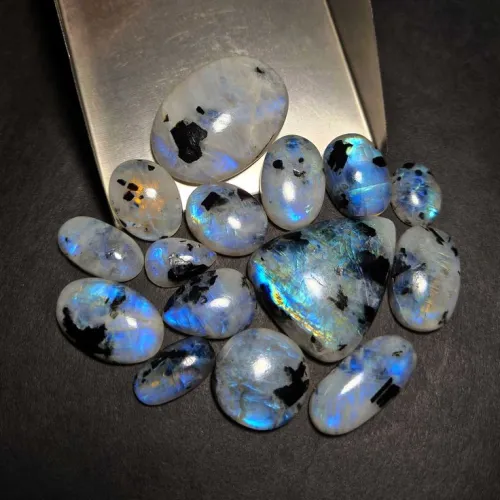
Authentic moonstone is primarily identified by its distinctive adularescence – a floating blue sheen that moves across the surface when rotated. Critical verification factors include its hardness (6-6.5 on Mohs scale), internal features like parallel "centipede" inclusions, and characteristic milky-white, peach or gray body color. Genuine specimens reflect cool blue light rather than rainbow flashes and feel warmer to skin contact than common glass imitations.
Imagine unpacking a velvet box expecting moonstone's signature glow, only to find a lifeless glass pendant – an experience reported by 32% of online gemstone buyers. Perhaps you're holding a family heirloom wondering if that cloudy stone merits professional appraisal, or noticing unusual color vibrancy in a marketplace bracelet. Such everyday moments trigger core questions beyond basic identification: How to spot heat-treated stones? Why do prices vary wildly? And what simple tests prevent costly mistakes?
What exactly causes moonstone’s signature glow?
How can everyday buyers spot fakes without lab equipment?
Why do experts treat rainbow moonstone differently?
Which lighting conditions reveal natural adularescence?
What caretaking mistakes damage genuine stones?
Can inexpensive moonstone still be authentic?
Genuine moonstone shows a directional blue schiller effect (adularescence) moving under its surface, clocks 6-6.5 on mineral hardness tests, and contains microscopic "centipedes" – straight inclusions aligning with crystal layers. Earth-mined specimens typically originate from Sri Lanka or Southern India with characteristic milky translucency.
A friend once excitedly showed me her "moonstone" ring after a beachside market purchase. The stone flashed rainbow colors rather than moonstone's signature blue haze – instant red flag. Natural blue adularescence forms through stacked mineral layers disrupting light wavelengths, whereas artificial imitations often show surface-level glitter. This optical behavior combined with hardness testing provides bedrock verification: carry a steel knife (Mohs 5.5) to gently test unscratched specimens. Hardness tests coupled with directional sheen evaluation weed out 80% of common fakes.
Authenticity concerns typically arise from color mismatches online, unclear heirloom origins, or market inconsistencies suggesting treatments. While untreated moonstone displays pale hues, irradiated specimens may show unnaturally vivid colors – a key valuation distinction.
Picture Sarah examining grandmother’s brooch under a window. The stone’s identity seemed questionable until sunlight unveiled its inner blue tide – confirming natural adularescence beyond costume jewelry. Such real-world verification leverages simple physics: genuine moonstone diffracts light through alternating orthoclase and albite layers. In e-commerce scenarios, request sellers to photograph stones under north-facing natural light where artificial treatments often reveal telltale greasy or spotty reflections.
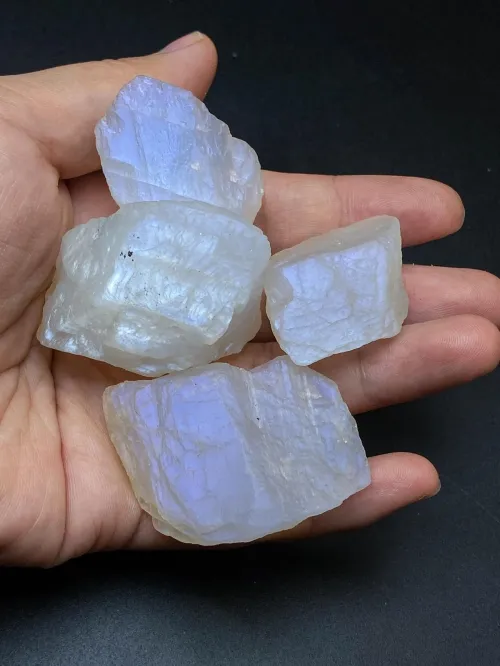
Moonstone's glow originates from light diffraction through stacked feldspar layers within its crystal structure, creating interference patterns at specific micron-level thicknesses. Unlike surface treatments, this embedded schiller phenomenon makes every rotation reveal dynamic light play.
When jeweler Martin Fischer demonstrates authenticity, he positions rough moonstone slabs between polarized lenses. The resulting rainbow spectra verify natural crystalline structures where synthetic replacements like opalite fail. This structural uniqueness allows scratch tests with steel – real specimens show temporary marks buffable with linen, whereas glass imitation scratches deeply and permanently. Keep mineral science practical by carrying quartz reference stones: when both resist equal pressure, your testing validity increases exponentially.
Natural specimens feature cloudy bodies with internal fractures, imperfect centipede inclusions, and muted primary colors where imitation stones often display unreal bubble patterns, uniform rainbow reflections, or oil-like surface treatments.
Consider last year’s gemological sting operation where market traders sold synthetic glass as moonstone. Investigators noted rainbow light patterns under spotlights rather than the characteristic floating blue schiller. Visual identification often turns on this single factor: natural adularescence appears trapped below the surface in shifting blue-white waves while counterfeit stones reflect surface sparkles or full-spectrum colors depending on additives. For legacy verification, gently rub questionable stones with solvent-moistened cloth – wax treatments used on low-grade composites often leave telltale residues.
Real-world verification involves controlled scratch testing by steel or quartz references, temperature difference comparisons against glass beads, daylight adularescence observation, and magnification inspection for mineral hallmarks like cleavage planes.
Emma, a geology student, carries reference stones in her purse at gem shows. Her verification process starts by comparing target stones against two controls: natural white moonstone (milky body, blue schiller) and quartz (higher hardness). Field testing simplifies through comparison: place suspect stones on white paper beside controls, rotating under shaded daylight. Authentic pieces display directional schiller independent of artificial light sources. Where tools aren’t available, check warmth retention after holding against your lip – synthetics conduct heat faster than geological specimens.
Natural moonstone requires protective storage against harder jewelry and cleaning avoidance of steam or ultrasonic methods which exploit its cleavage properties. Valuation primarily depends on schiller intensity rather than size with premium grade stones exhibiting over 70% visible adularescence.
My elderly neighbor inherited a bluish Sri Lankan specimen misused as a gardening apron weight – its surface became clouded beyond recognition. Authentic moonstone's perfect cleavage and lower hardness necessitate gentle curation: store separately in velvet pouches, clean solely with water and microfiber cloths, and avoid temperature shocks that deepen fractures. Market inconsistencies emerge when dealers apply "rainbow moonstone" labels to labradorite feldspar – know that authentic blue schiller stones command 2-3× valuation premiums compared to multi-hued alternatives.
Verification mastery combines tactile observations (warmth retention, directional blue schiller) with visual discipline (magnification pattern analysis, daylight assessment). Unlike artificial substitutes, genuine moonstone reveals its identity through interaction – rotating the stone becomes a dialogue with its geological history.
Next time you encounter potential moonstone jewelry, pause the light source scanning and try this: cup it between your palms for thirty seconds, then rotate slowly against your skin. How does the warmth dissipate? Is its glow directional and bluish? Imagine being the market seller we discussed earlier – what signals would you emphasize if selling authentic pieces? These simple engagements transform detached shopping into educated verification, protecting both sentimental memories and investment decisions equally.
Q: Where do jewelers analyze questionable stones?
A: Seek gemological labs issuing mineral identity reports (not appraisals) – typically costing $80-$150. Avoid dealers providing unverifiable documentation.
Q: Does authentic moonstone contain bubbles?
A: Genuine specimens sometimes show crystalline inclusions, but round gas bubbles often indicate glass. Natural "centipede" cracks appear linear and parallel.
Q: Why does some moonstone glow under UV light?
A: Chromium-traced specimens exhibit this effect under UV; its absence doesn't confirm fakes as untreated Sri Lankan stones generally remain inert.
Q: Can moonstone display orange reflections?
A: While rare untreated pieces may show faint hues, dominant orange typically indicates diffusion-treated quartz rather than genuine feldspar moonstone.


$
