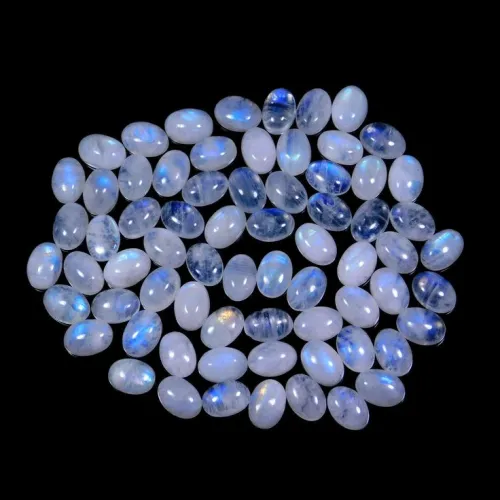
Authentic moonstone exhibits adularescence - a distinctive floating blue light effect visible when tilted under illumination. Genuine specimens register 6-6.5 on the Mohs hardness scale and typically contain natural imperfections. Reliable verification combines multiple tests since glass or synthetic substitutes lack mineral depth and structural complexity.
Picture this: you just unwrap an online jewelry order where the seller promised "glowing blue adularescence," yet the pendant in your palm radiates only a dull, uniform sparkle. Questions bubble up - is that milky white base authentic? Does the sheen shift naturally? Now imagine finding your grandmother's heirloom brooch catching afternoon light differently than remembered, revealing streaks beneath its surface that whisper uncertainties. These exact scenarios spark our journey through moonstone verification. Whether you're bargaining at a flea market or re-evaluating jewelry after museum visits, we'll explore what makes this mineral marvel unique and how to separate natural wonders from clever replicas. Beyond "Is it real?", we'll tackle how light transforms within genuine stones, why microscopic quirks prove authenticity, and what subtle signals your fingertips can detect.
1. What essential markers distinguish genuine moonstone instantly?
2. Where do authenticity questions typically arise in everyday situations?
3. How does light create moonstone's signature glow?
4. What visual differences help spot imitation stones?
5. Which practical techniques verify authenticity without lab equipment?
6. Which industry insights affect stone value and care?
7. Can genuine moonstones show imperfections?
8. How does cleaning method impact moonstone preservation?
Genuine moonstone shows moving blue light and contains natural irregularities. Authentic specimens demonstrate adularescence—a billowy glow that glides across the surface when tilted. Natural inclusions like tension halos appear under magnification, while synthetic alternatives often display artificial perfection. Hardness tests place true moonstone between 6-6.5 on Mohs scale, making it scratch-resistant yet not indestructible.
Imagine handling a moonstone ring passed through generations. As you angle it toward sunlight, that elusive blue seems to float beneath the surface like mist over water – not stuck to the top like cheap paint. Your fingertips register the stone's cool persistence against skin, unlike warmer glass variants. This observable phenomenon traces back to structural geology: alternating orthoclase and albite mineral layers diffract light into moonstone's signature glow. Unlike quartz or plastic imposters exhibiting monotone sparkle, genuine pieces conceal microscopic stress fractures formed during natural crystallization. While prized blue sheen remains most valued, authentic stones can present blue-white, gray, or peach base colors. The crucial takeaway? That ethereal-looking blue shimmer must move with the stone, not behave like static glitter.
Authenticity questions often emerge during acquisitions or re-examinations. Uncertainty frequently surfaces when comparing marketplace finds against certified references, online purchases against product images, or inherited jewelry against new discoveries. These comparison moments highlight discrepancies between expected and observed characteristics.
Picture yourself at a bustling bazaar where a vendor pushes a "natural moonstone" ring for ten dollars, claiming its flawless clarity indicates superior quality. Your gut nudges doubt—why does an untouched mineral exhibit zero imperfections? Now recall opening e-commerce deliveries where the promised "vibrant shimmer" arrives a plastic-like, uniform sparkle. Such experiences trigger what gemologists term "the verification itch," when psychological tension emerges between desire and suspicion. Another friend recently described examining an inherited brooch after museum exposure, noticing unfamiliar internal clouds under garage lighting. What distinguishes these moments is context disruption—either new lighting conditions, fresh knowledge, or broken expectations spotlighting inconsistencies. These occasions prove crucial: natural stones reveal their true behavior under variable light and perspective angles, while fakes maintain consistent artificial patterns.
Moonstone's glow stems from light diffraction within layered minerals. Adularescence occurs when light penetrates stacked orthoclase and albite feldspar sheets, bending through microscopically differing densities. This laminated structure creates interference that scatters blue wavelengths across the surface. Genuine specimens require this natural crystalline architecture; synthetic substitutes cannot replicate its optical dynamics.
A friend described discovering this phenomenon while gardening when sunlight hit her ring at 45 degrees—suddenly, that mysterious blue emerged like dawn light bleeding through clouds. This transformative moment illustrates Schiller effect physics, where alternating mineral sheets selectively diffract wavelengths. Thinner layers typically yield blue hues, while thicker formations create milky or white bases. Crucially, moonstone's internal structure resembles geological lasagna: countless fine layers deposited over millennia. Counterfeit attempts using laminated glass or dyed resin can't achieve equivalent molecular spacing, resulting in predictable, shallow sparkle instead of dimensional glow. When testing jewelry, consider this: authentic adularescence appears location-dependent—the glow emerges precisely where light intersects internal structures rather than coating the entire surface uniformly.
Evaluate these light-responsive behaviors:
Directional sheen shift: Rotate specimens under consistent lighting at 15-degree increments; authentic samples show light flowing laterally across curved surfaces, not flickering statically.
Light penetration patterns: Use a penlight against dark backgrounds; genuine stones exhibit mild cloudiness beneath the surface—signs of natural crystalline growth.
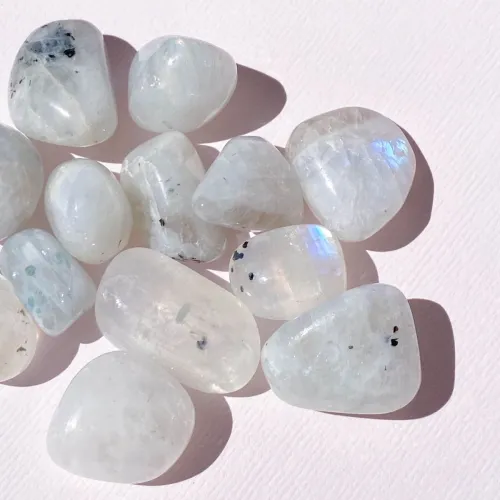
Genuine moonstone contains organic imperfections and layered glow unmatched by synthetics. Natural specimens exhibit unique inclusions like tension fractures called "centipedes" under magnification, while glass or lab-made alternatives often appear unnaturally flawless. Authenticity also manifests in edge inconsistencies; cabochon-cut stones may feature minimally rounded facets unlike machine-perfect replicas.
When Jane held her grandmother's pendant beside a souvenir store imitation, differences emerged like characters in separate stories. The heirloom piece presented subtle internal clouds that seemed alive as light shifted—not frozen like plastic glitter traps. Under a loupe, minute stress halos branched like microscopic lightning from pressure points, impossible to replicate synthetically. Meanwhile, the marketplace imitation displayed artificially uniform bubbles and consistently sharp edges. Even color behavior showed discrepancies: synthetic opalite—frequently mislabeled as rainbow moonstone—shifts through chromatic flashes while true stones produce softer, directional luminosity. Field gemologists note additional clues in jewelry settings: authentic stones may exhibit slight facet rounding from hand-finishing, while glass beads in bracelets often show unnatural drilling marks inconsistent with mineral hardness. The key lesson? Embrace nature's quirks—those irregular formations validate authenticity.
Verify moonstone authenticity using non-destructive observational tests. Combine simple methods like temperature comparisons, weight differences, and magnification examination. Prioritize context-specific assessments such as examining necklace bead holes or observing light responsiveness from various angles.
Picture Sara testing her suspicious flea market ring. She rubs the gem with wool for thirty seconds—natural moonstone maintains static cling longer than glass, which quickly loses charge. This electrostatic behavior complements her morning sunlight test: rocking the stone against a white card reveals distinctive color drift rather than synthetic uniformity. Gem enthusiasts increasingly record these examinations using smartphone macro lenses, capturing telltale inclusions for later professional review. Weight assessment provides further context—mineral moonstone feels noticeably denser than plastic or glass equivalents. When evaluating vintage settings, inspect where jewelry touches skin: authentic stones display characteristic wear patterns matching Mohs hardness parameters. Most crucially, combine low-tech tactics: real stones tend to stay cooler against wrists longer than synthetics and typically exhibit microscopic abrasions around setting points from professional cutting tools.
Origin geography affects structural characteristics. Sri Lankan and Indian stones often show finer adularescence due to geological pressure conditions, while Madagascar specimens present unique milky bases. Proper care preserves authenticity indicators—gentle cleaning prevents surface abrasion that could obscure natural signals.
Imagine discovering variations between stones from different regions after museum visits. Those originating from Sri Lanka's geological formations tend to exhibit more concentrated blue sheens, developed through millennia of natural compression. While commercial advertisements inflate "value" implications, informed verification prioritizes structural integrity. Practical management extends beyond authentication: always store loose stones separately in fabric-lined compartments to prevent diamond-scratching incidents. For cleaning, forget ultrasonic machines; instead, consider lukewarm water with mild soap, gently dabbed using soft cloths. These approaches preserve the very inclusions and surface characteristics needed for future verification. Remember: even authentic moonstone can sustain damage—its moderate hardness allows fine scratches under abrasive conditions. Preservation maintains both monetary value and verifiable proof stones haven't been replaced after purchase.
Verify moonstones by combining adularescence tests with weight comparisons and inclusion identification. Document findings through simple tools like smartphone photography that capture essential markers for reference.
Picture revisiting grandma's pendant now equipped with fresh perspective. You'd rotate it slowly to observe if that blue moves fluidly. Notice slight internal haziness? That's cause for celebration, not concern. Store it in velvet overnight to prevent scratches from harder stones. Next flea market visit, you'll test jewelry weight against a known mineral sample. You might use a ceramic tile's rough edge for streak tests—authentic stones leave colorless trails. Each step gathers puzzle pieces for holistic verification. This methodology transforms passive ownership into informed guardianship of natural treasures.
Q: Can authentic moonstone get small scratches?
A: Yes, naturally. Moonstone sits at 6-6.5 on the hardness scale, meaning everyday wear may cause fine surface marks without indicating forgery—even authentic stones show natural abrasions over time.
Q: Why do some moonstones glow differently at various times?
A: Light angles and environmental reflections significantly impact adularescence visibility. Authentic specimens may appear brighter in dynamic outdoor settings than under static indoor lighting due to physics principles.
Q: How to clean moonstone jewelry safely?
A: Mild soap with lukewarm water, dabbed using non-abrasive fabric prevents surface accumulation that could obscure light response. Avoid steam cleaners or chemical solutions preserving natural signatures.


$
