Moonstone prices vary significantly based on quality, color play, and origin. Common grey or white varieties typically range from $10-$50 per carat, while rare blue or rainbow stones with intense adularescence can reach $100-$500 per carat. Overall, it's considered moderately priced compared to other gemstones – neither the most affordable nor prohibitively expensive for most buyers.
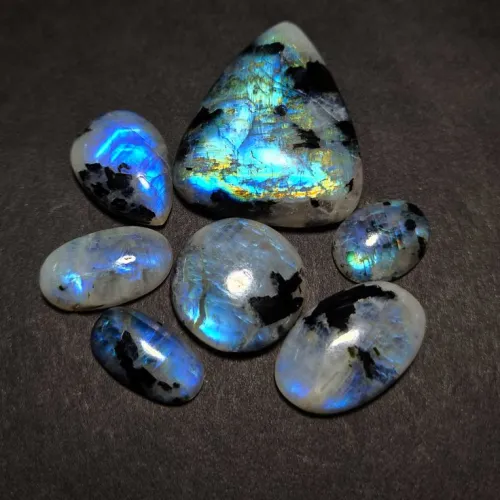
Picture this: You're scrolling through an online jewelry store, captivated by moonstone pendants that promise an ethereal glow. Adding one to your cart, you imagine wearing it to next week's gathering. But when the package arrives, the stone looks disappointingly dull – a flat grey pebble instead of the luminous gem in product photos. Or imagine overhearing two shoppers at a craft fair: One holds up a vintage brooch claiming "authentic heirloom moonstone" at $200, while a nearby booth offers a similar piece for $40. These everyday moments spark natural questions about moonstone's real value range. Beyond simply "is it expensive?", you'll likely wonder why pricing varies so widely, how to spot quality differences during jewelry shopping, and whether it's practical for pieces you'll wear daily.
Here's what we'll explore to bring clarity to these questions: 1. What core factors create moonstone's price extremes? 2. How does its signature glow translate to dollar values? 3. Why does geography impact a stone's worth? 4. Where do retail settings affect price perceptions? 5. Can affordable moonstones endure daily wear? 6. What hidden considerations affect long-term value?
Quality, optical effects, and geographic origin create the biggest price gaps in moonstone. While white/grey stones often cost under $50 per carat, exceptional blue specimens with vivid sheen can sell for over $400 per carart.
A friend once spent months hunting engagement stones before discovering moonstone's surprising pricing layers. They were puzzled when seemingly identical pieces varied by hundreds of dollars, until they learned moonstone belongs to the feldspar mineral family whose value leans more on visual properties than weight. Imagine browsing Etsy listings where two cloudy white stones carry similar price tags, then noticing a ring with rippling blue light priced ten times higher. This glow phenomenon called adularescence – shifting light reflections created by intergrown mineral layers – functions as moonstone's value engine. Additionally, geographic origin establishes a natural hierarchy: Stones mined in Sri Lanka frequently display stronger blue sheens than Indian counterparts, affecting their market position.
When evaluating any moonstone, focus primarily on three observable traits:
Adularescence intensity directly establishes moonstone's value tier, with blue sheen ranking highest among collectors and designers.
Picture this scenario: At a gallery opening, you compliment a painter's rainbow moonstone necklace that seems to capture the northern lights. She recounts buying it years ago at a mineral show, where the vendor demonstrated how the stone's watery blue glow distinguished it from cheaper alternatives. Adularescence occurs when light refracts through microscopic mineral layers formed during geological crystallization. Higher-quality stones tend to exhibit:
Industrial-grade moonstones lack these qualities, ending up in ceramics rather than jewelry. This explains why a high-clarity one-carat blue moonstone may cost more than a larger five-carat white stone with weak luminosity.
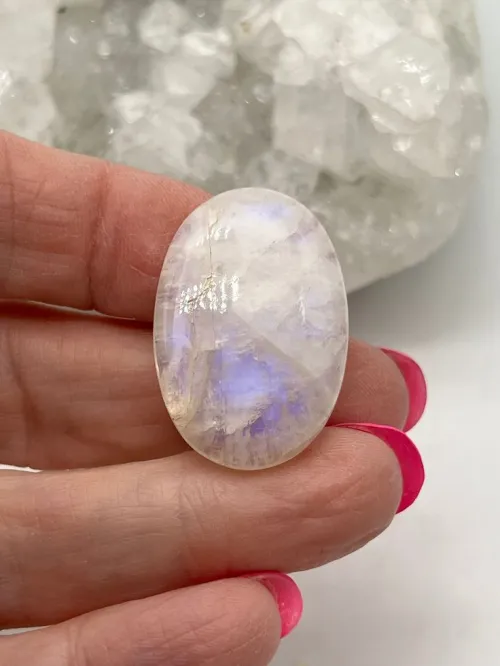
Formation conditions and mineral composition determine natural rarity, establishing clear pricing tiers between moonstone varieties.
Your geology-loving friend might delight in explaining how moonstone's origins affect store prices. Picture hiking in South India where miners extract moonstones from pegmatite veins – environments where alternating potassium-rich and sodium-rich feldspar layers developed under specific pressure conditions millions of years ago. These parallel crystalline layers create the prized optical phenomenon. In regions like Southern Madagascar where geological activity produced thicker, less-uniform mineral bands, stones tend toward milky whites, putting them in more affordable jewelry ranges. Ceylon moonstones often outperform others due to mineral impurities creating superior blue reflections, justifying higher per-carat prices. This natural lottery means rainbow moonstone (with multicolor flashes) appears only in limited deposits, making it 3-4 times rarer than blue varieties.
Retail environments dramatically influence moonstone pricing perceptions, with identical-quality stones often valued differently across sales channels.
A group recently encountered this during their gem show field trip. Twin sisters found nearly indistinguishable cabochon pendants – but at side-by-side booths, one carried a $240 tag while the other cost $65. Why? The expensive vendor specialized in artisanal mining collectives with transparent sourcing, while the cheaper booth sold Indian commercial-grade bulk stones. Consider how pricing scenarios unfold:
Additionally, lab-created alternatives have entered middle-market spaces, typically priced 40-70% below natural equivalents.
Moonstone requires strategic settings and care routines to maintain value during regular use, particularly for rings or bracelets.
Imagine someone choosing moonstone for their engagement ring against traditional diamonds. Their research uncovered conflicting durability reports until they tested a friend's moonstone ring. It showed visible microscratches after two years of constant wear. With moderate hardness (6-6.5), moonstone ranks lower than many jewelry staples:
Protective settings become essential investments for frequently worn pieces. Bezel settings shield vulnerable edges better than claw prongs, adding 20-50% to costs but protecting against chips and scratches that diminish appearance and resale value. This explains why daily-wear moonstone rings may justify higher initial costs than pendants that avoid physical impacts.
Long-term value retention involves verifying authenticity at purchase, implementing proper maintenance, and understanding secondhand valuation factors.
Picture inheriting an Edwardian moonstone brooch. Before considering resale options, you'd want to determine whether it's natural or synthetic, treated or untreated. Common verification techniques include:
Care protocols also protect worth: Clean jewelry only with mild soap (ultrasonic cleaners can crack stones), store separately from harder gems to prevent scratching, and examine pieces under golden-hour sunlight which best reveals color dynamics. For inherited pieces, documentation of origin proves particularly valuable when seeking appraisals.
The next time you browse moonstone – whether online or in-store – pause to reassess what creates real rather than perceived value. Check stone reactions under multiple lighting angles rather than relying on display case effects; verify setting security if considering daily-wear pieces; compare body clarity by setting stones against plain backgrounds; and always question extreme value claims without geological backing. These simple observational practices help align the stone's natural properties with appropriate financial decisions.
Can cheaper moonstone pieces last without damage?
Affordable moonstone jewelry may show wear over time without protective settings. Pieces like pendants experience fewer impacts than rings, improving longevity when handled carefully.
How are moonstones formed geologically?
Moonstone develops when orthoclase and albite minerals interlayered during slow crystallization processes millions of years ago – this unique structure creates their signature glow effect.
Why might two seemingly similar stones differ radically in price?
Visible similarity might mask key distinctions in adularescence intensity, clarity differences apparent under magnification, undetected treatments altering appearance, or geographic origin affecting market valuation.
Do synthetic moonstones develop the same visual characteristics?
Lab-grown alternatives often achieve similar effects like adularescence but may display minor differences like non-directional sparkles under magnification. Pricing differences typically reflect authenticity rather than aesthetics.


$
