Moonstone is a semi-translucent feldspar mineral gemstone renowned for its unique adularescence effect—a milky-blue glow that appears to float beneath its surface under light. Formed from intergrown orthoclase and albite minerals within volcanic rocks, this June birthstone exhibits properties like 6-6.5 hardness on the Mohs scale and occurs naturally in locations ranging from Sri Lanka to Tanzania.
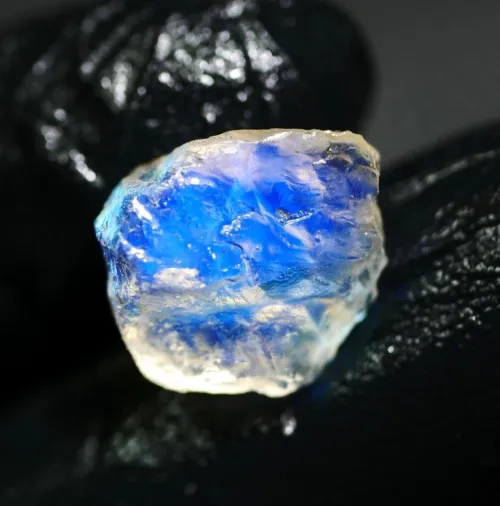
You finally receive that moonstone bracelet ordered online after weeks of anticipation. But as you unwrap it near your bedroom window, the glow seems less mystical than the product photos promised. Or perhaps walking along the shore at sunrise, you notice someone's ring capturing dawn light like moonbeams dancing on water, sparking quiet curiosity about how a stone creates such magic. Moments like these—holding heirloom jewelry, comparing online purchases, or encountering natural beauty—often ignite questions about moonstone's true nature beyond the romance. Alongside the core "what is it?" question, we'll unravel why advertised effects sometimes disappoint, how to distinguish natural stones from look-alikes, and what practical factors affect real-world glow.
What scientific properties create that signature glow?
Where might you naturally notice authentic adularescence?
How can lighting conditions affect what you perceive?
What separates genuine moonstone from synthetic alternatives?
Which practical observations reveal quality during handling?
Where does cultural symbolism diverge from verifiable facts?
Moonstone is fundamentally an orthoclase feldspar mineral with a layered crystal structure causing its signature glow. Unlike many gems defined by composition alone, moonstone's identity centers on adularescence—a light phenomenon arising from stacked lamellar layers scattering light. These layers develop during slow magma cooling when orthoclase and albite minerals intergrow in parallel formations within volcanic rock.
Picture holding a translucent oval moonstone cabochon as afternoon light hits your desk. When tilted, a milky-blue radiance seems to glide beneath its surface like mist over water. This effect occurs because light enters the stone and scatters between alternating mineral layers of different refractive indexes. Thinner layers generally produce bluer sheens, while uneven layering creates cloudier appearances. Hardness tests reveal another key trait: Moonstone registers 6-6.5 on the Mohs scale—soft enough that storing it alongside harder gems can lead to surface abrasions. These observable characteristics make moonstone uniquely identifiable among feldspars.
Notice the glow movement: Authentic adularescence appears to emerge from within the stone, not just reflect off its surface like metallic luster.
Observe transparency patterns: Hold moonstone over printed text—how clearly letters show reveals layer alignment quality affecting glow visibility.
Feel for micro-scratches: Running fingertips lightly over facets may detect abrasions indicating softness requiring careful wear.
People most frequently recognize moonstone through interactive light moments during jewelry handling rather than technical descriptions. Unlike heavily faceted gems, moonstone reveals its magic through movement—rotating a ring near a lamp, passing sunlight through a pendant while walking, or even noticing reflections from phone screens in dim rooms.
Your grandmother hands you a pendant before a trip, recalling how its milky whispers comforted her during travels. Turning it in kitchen light, streaks of blue float across its surface like low-hanging mist. This isn't spiritual energy but measurable light physics where angular light enters perpendicular mineral layers. Similarly, browsing jewelry stores, you might compare gems under display lights versus near windows. Natural sunlight often reveals subtle directional sheens unlike synthetic opalite's uniform sparkle. These ordinary moments highlight human-scale observations: Notice how changing the light source angle (not moving the stone) makes the glow seem to flow toward the most illuminated edge, helping distinguish depth-based adularescence from surface glitter.
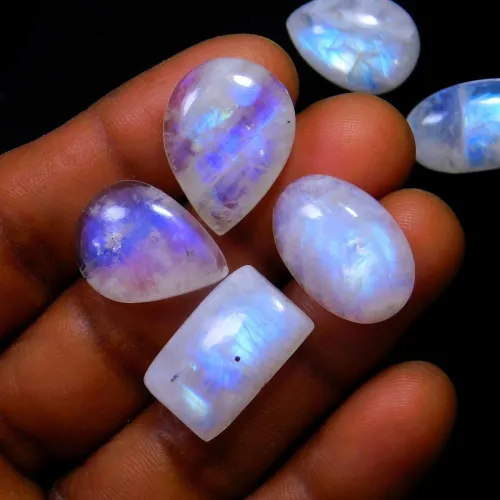
Adularescence happens when light scatters between regularly stacked crystal layers whose chemical composition differs slightly. When directed light enters the stone between orthoclase and albite layers, it refracts at each interface due to varying mineral densities—like light bending through stacked sheets of frosted glass. This scattering creates the depth-rich glow seemingly hovering below the surface.
Imagine sitting near a single lamp with moonstone resting directly under its beam. Instead of shining all angles simultaneously, tilt it slowly 15-30 degrees. Quality stones reveal a traveling wave of light perpendicular to the layers, like seeing moonlight drift across clouds. The width and intensity of this blue sheen depends on layer consistency—Sri Lankan moonstones often developed thinner, more uniform layers from ideal volcanic cooling rates than specimens from other regions. But this effect isn't mystical or guaranteed: Flaws like uneven layers block light paths, yielding milky patches that weaken glow visibility. Such variations explain why your online purchase might differ from marketing shots or why antique pieces display distinctive personality.
Genuine moonstone is identifiable through its floating adularescence, mineral consistency and temperature reactions absent in alternatives.
A jeweler places your pendant under a polariscope after noticing suspicious color distribution, explaining why that "rainbow moonstone" you purchased is actually labradorite feldspar. Synthetic opalite glass remains the main counterfeit risk because its surface swirls mimic moonstone's allure minus the depth physics. Place suspect stones beside a known authentic piece under 30 cm distance from a lamp. True moonstone's glow shifts internally when light angles change, while synthetic versions sparkle with constant surface glitter without depth movement. For body color, lay specimens on white paper near a window: Natural moonstone shows inconsistent color concentration reflecting real mineral variations versus unnaturally uniform dyed stones. Sunlight tests also help—leave the stone in direct sunlight for an hour. Significant color shifts could indicate dye treatments or unstable composition, while authentic moonstone tends to maintain consistent hues.
Assess layer visibility: Hold the stone over small print—if letters appear consistently blurred rather than unevenly visible across zones, layering may be tight enough for premium glow.
Check edge sharpness: Use a loupe to inspect the edge for straight internal fractures known as cleavage cracks—common weak points affecting durability.
Note temperature conduction: Moonstone typically feels cool longer than glass after holding due to differing thermal properties.
Evaluate quality by prioritizing glow visibility, structural integrity signs, and protective settings.
Consider adularescence the priority during selection—does it appear consistently under normal lighting? Notice that cabochon-cut stones with smooth domed backs enhance light play. Run your fingertip across faceted edges feeling for microscopic chips indicating cleavage planes vulnerable to impacts. Cloudiness distribution matters too: Areas with densely packed mineral layers scatter light best while overly translucent zones reduce the glow effect. When choosing jewelry settings, prioritize protective bezel or halo encasements that shield vulnerable edges compared to prong settings. Remember that softness requires special care—avoid hanging moonstone pendants near keys or storing them loose with diamond or quartz pieces that can scratch their surface. These tangible considerations help maintain moonstone's delicate beauty during real-world enjoyment.
Moonstone's symbolic connections reflect historical observations of its properties rather than supernatural attributes.
Many cultures associate moonstone with lunar cycles due to its changing appearance under shifting light—a direct physical response to layered mineral structures interacting with photons. When ancient travelers carried moonstone believing it offered protection during night journeys, they noticed visible properties guiding darkness navigation through reflected light rather than mystical intervention. Modern misinterpretations sometimes mistake its light-changing physics for spiritual energies. Compare this to scientific realities: No evidence supports healing claims, but verified traits like thermal sensitivity explain why stones left in sunlight may shift color if treated. This natural gem reminds us that observable mineral behaviors inspired meaningful stories across generations—stories that gain depth when understanding their physical roots.
When next encountering moonstone—whether shopping for jewelry or admiring someone's ring—focus on two key verifiable traits: adularescence movement quality and structural care signs. Before purchasing, remember that lighting conditions dramatically affect perceived glow; ask to examine pieces near windows and under artificial light. Notice how the stone interacts with movement—authentic displays will show fluid internal light shifts rather than static sparkles. For existing pieces, apply simple maintenance like using microfiber rather than chemical cleaners to preserve reflections. Picture yourself examining an heirloom necklace not through abstract lore, but appreciating documented mineral properties behind its beauty. When that familiar curiosity sparks at jewelry displays, you'll now have a grounded framework transforming fleeting moments into knowledgeable appreciation.
Can moonstone be worn everyday?
Its 6-6.5 hardness may tolerate daily wear in protective settings but remains vulnerable to knocks and abrasions from harder surfaces.
Why do Sri Lankan moonstones typically cost more?
Geological conditions historically produced finer layer alignments yielding stronger blue adularescence compared to stones from other regions.
What differentiates moonstone from labradorite?
Moonstone is orthoclase feldspar with blue-white glow, while colorful flash "rainbow moonstones" are labradorite feldspar displaying schiller effect.
Do dark moonstones indicate lower quality?
Body color varies naturally—darker tones like green or gray may contain visible layers that still yield strong adularescence.
How should moonstone be pronounced?
Standard pronunciation follows "moon-stohn," with both syllables clearly articulated rather than blended.


$
