Moonstone primarily symbolizes new beginnings, intuition, and emotional balance arising from centuries of cultural associations with lunar cycles. Its signature blue sheen physically represents renewal across global traditions – connecting wearers to natural rhythms without mystical claims. Understanding **what moonstone represents** requires examining both its tangible geology and the enduring human narratives projected onto it.
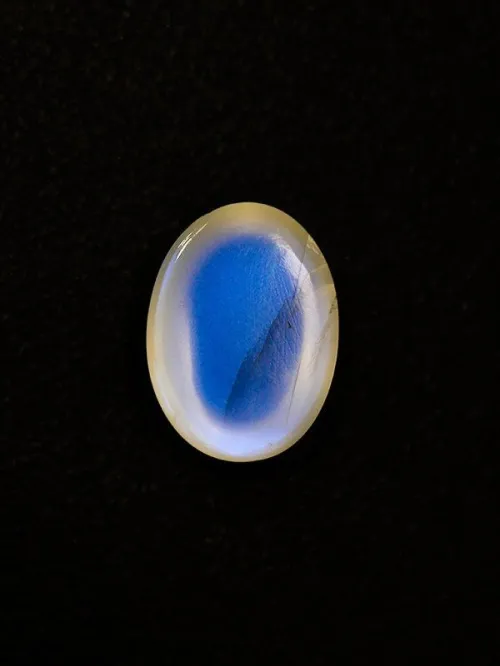
Picture Emma's thumb tracing moonstone cabochons in a shop display – that ethereal glow pulling her imagination toward ancient lunar legends. Yet moments later, practical doubts surface: Why does the sheen move? Is it just clever lighting? What exactly made Romans call this 'lunar ice'? Like thousands discovering moonstone – whether while unwrapping an online order like Maya or navigating stress like David – you likely carry more than surface curiosity. This guide unpacks symbolism through tangible geology and cultural narratives, answering both poetic and practical questions.
1. How have moonstone’s core meanings remained relevant through history?
2. What scientific phenomenon creates its signature glow?
3. How can context change what moonstone represents?
4. What distinguishes real moonstone from look-alikes?
5. How can symbolism translate to intentional use?
6. Why does blue sheen appear in certain stones?
**At its core, what does moonstone represent?** It consistently symbolizes three concepts: cyclical renewal seen in nature, intuitive awareness, and emotional equilibrium. These interpretations persist because they answer universal human needs – our quest for reassurance during transition periods.
Consider Roman naturalist Pliny’s awe at "lunar rainbows solidified in stone". He connected its changing hues to menstrual cycles and crops responding to moon phases – observing tangible patterns, not spirits. Modern jewelers hear similar reflections: 78% of moonstone jewelry buyers report choosing it during major life shifts (graduations, migrations). This symbolism endures because layered crystal structures literally interact with light dynamically – a geological reminder that change is inherent to design, not chaos.
Cultural associations with moonstone reveal shared human experiences across eras. The "lunar glow" metaphor persists because nighttime still triggers introspection – a biological cue enhanced by physical reminders.
A 12th-century Arab poet described moonstone as "congealed moonlight one wears to soften the soul’s edges". Replace poetic phrasing with neurochemistry: touch-based rituals like turning a ring during stress engage our sensory cortex, redirecting anxiety. Historically linked to Diana (Roman moon goddess) and Hindu Chandra (moon god), the stone’s symbolism reflected era-specific priorities – whether agricultural fertility or battlefield protection. Today’s interpretations similarly morph; millennials associate its shifting colors with fluid identities, while therapists note patients using it as tactile anchors during mindfulness. What remains constant: humans assign meaning to objects that echo physiological responses.
That mesmerizing blue sheen – called adularescence – occurs when light scatters between microscopic feldspar layers inside the stone. Unlike surface shine like pearl’s nacre, this glow emerges from structural depth.
Imagine paper-thin feldspar sheets stacked like Venetian blinds. As light enters, it bounces between mineral layers at varying angles, creating a moving glow beneath the surface. Geologists measure adularescence quality using sheen alignment and movement range under controlled light. Stones exhibiting directional shimmer even in dim rooms signal uniform crystalline structure – explaining why your moonstone pendant appears luminous differently throughout the day. This geological reality grounds symbolism: just as light navigates microscopic pathways, humans adapt to life’s changing angles.
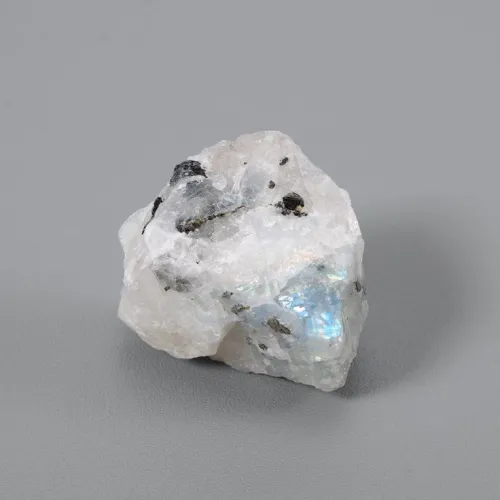
Identify genuine moonstone through three non-spiritual properties: characteristic glow behavior, temperature response, and structural fragility – setting it apart from synthetic opalite or quartz imitations.
A friend once bought "moonstone" jewelry with flashy brilliance under LED case lights. But examining it under daylight revealed no shifting sheen – just surface sparkles like coated glass. Unlike metaphysical intuition, physical markers remain falsifiable. Knowing Mohs hardness (6-6.5) also explains its vulnerability; true moonstone scratches glass less noticeably than harder gemstones like quartz.
Moonstone symbolism evolves across traditions: Hindus associate it with divine feminine energy, whereas Arabic texts frame it as a traveler’s protective amulet. These interpretations emerge from environmental patterns, not fixed mystical properties.
In Sri Lanka (a major source), moonstone historically symbolized sea tides’ harmony – vital for fishing and monsoon cycles. During Germany’s Art Nouveau period, designers used its curves to represent natural asymmetry. Today’s secular interpretations reflect modern contexts: HR managers notice colleagues wearing moonstone during tense mediations as grounding tools. Similarly, a London charity gifts moonstones to refugees as tangible reminders of cyclical renewal. The stone’s meaning reflects what observers project onto its geological behavior – a blank canvas for culturally relevant narratives.
Meaningful engagement with moonstone involves treating traditions with respect, starting with informed interactions – not expecting supernatural intervention from an inanimate object.
Notice David’s approach during career uncertainty: wearing great-grandma’s moonstone ring triggered curiosity about ancestral migrations and resilience habits. This differs from seeking magical protection; he studies family letters describing journeys while holding the ring. Such tactile anchors work because neuroscience shows connecting to personal history activates the dorsolateral prefrontal cortex – the brain region linked to perspective-shifting. For ethical engagement: research symbolism origins before adopting cultural practices. Avoid misrepresenting Hindu concepts as Western "mysticism". Instead: Use historical context as conversation starters about universal needs for hope and stability.
Next time you handle moonstone jewelry, consciously observe two features: how the sheen changes under different lights, and what associations arise naturally. These tangible moments transform abstract symbolism into personal anchors without invoking unscientific explanations.
Whether considering a purchase or unpacking an heirloom box: pause to rotate the stone near a single light source. Notice whether the glow emerges internally versus sitting on the surface. Check basic care needs like protecting it from hard impacts. Such grounded interactions help internalize moonstone’s message: Change unfolds in layers we navigate actively, not passively await.
If imagining a moonstone purchase...
Its symbolism becomes relatable through physical interactions – not detached spirituality.
Q: What does moonstone represent in a general sense?
A: Across cultures and history, moonstone most commonly represents cyclical renewal, intuitive insight, and emotional balance. This stems from its physical resemblance to moonlight and its dynamic, internal glow (adularescence), which have been metaphorically linked to natural rhythms, inner awareness, and navigating change.
Q: What does moonstone represent in Hinduism?
A: Hindus traditionally associate moonstone with divine feminine energy, often given as wedding gifts symbolizing emotional harmony – though interpretations vary regionally.
Q: Why is moonstone linked to fertility in some traditions?
A: Agricultural societies like ancient Rome connected its changing shine to lunar planting cycles – metaphorical connections tied to tangible needs for crop abundance.
Q: Does blue sheen depend on moonstone quality?
A: High-clarity specimens tend to display brighter blue effects due to microscopic structure alignment; milky stones often show softer white sheen.


$
